
Tasa Coffee Roasters Closes Permanently as Staff Walks Out Over ICE Allegations
West Humboldt Park's Tasa Coffee Roasters abruptly shut down after staff walked out over allegations that its co-founder works as a supervisory ICE deportation officer.
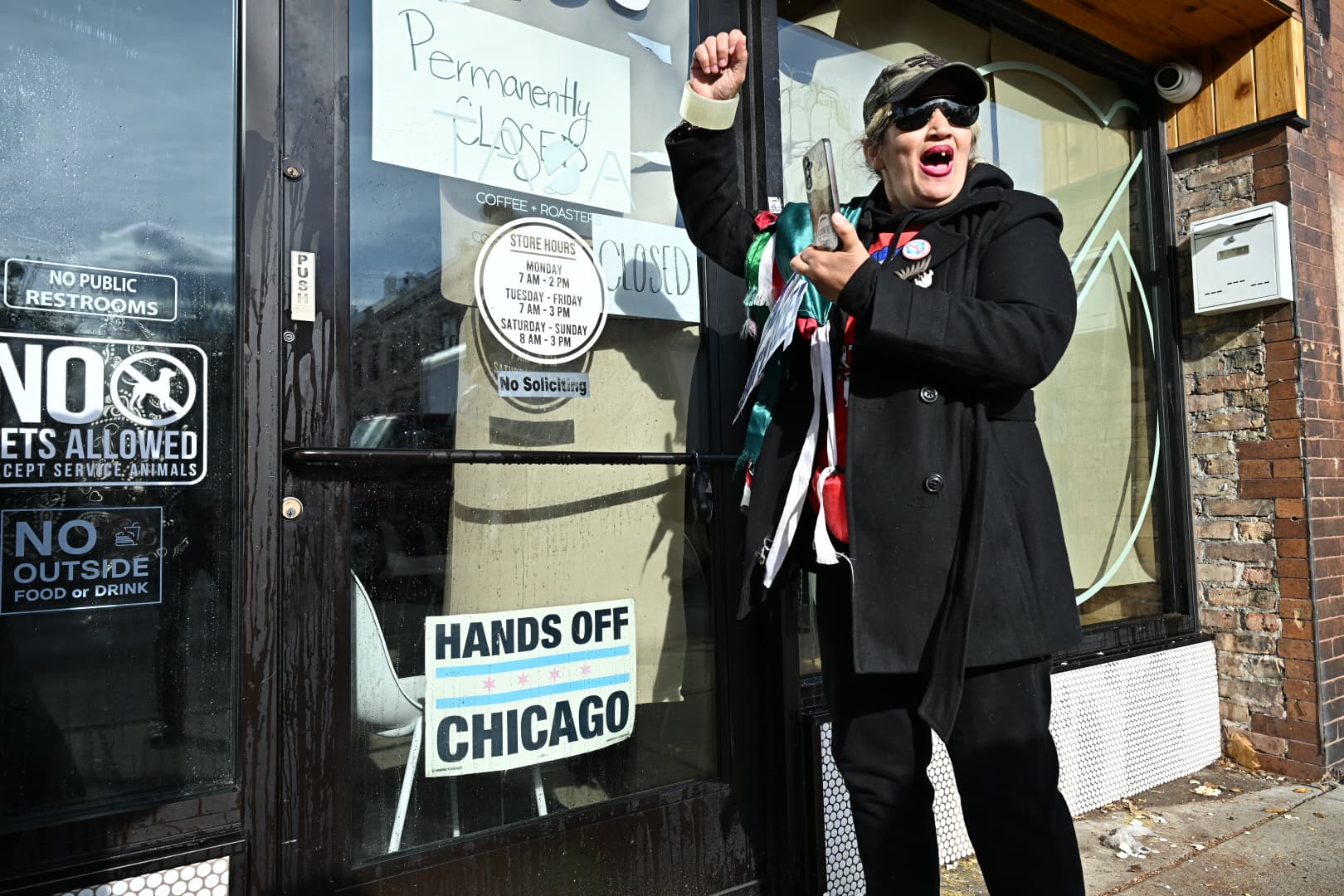
A masked figure wearing sunglasses and a hooded sweatshirt slipped inside 4136 W. North Ave. on Tuesday afternoon, taping a closure notice to the glass while protesters chanted outside. According to Block Club Chicago, West Humboldt Park specialty shop Tasa Coffee Roasters has shut its doors permanently following explosive online allegations that co-founder Pierre Marquez serves as an active enforcement agent for U.S. Immigration and Customs Enforcement.
The shop never reopened after workers walked off the job on Monday. Within twenty-four hours, an anonymous posting on Reddit sparked intense neighborhood anger, citing records from the unofficial watchdog database Ice List. The directory identified Pierre Marquez as a supervisory detention and deportation officer. For an enterprise that built its brand around community roots and Latino heritage, the revelation caused an immediate, fatal rupture with its neighborhood customer base.
The Reddit Thread That Emptied 4136 W. North Ave.
Trouble escalated swiftly on Monday when screenshots began circulating across local message boards. Workers confronted management, refused to staff the counter, and walked out the front door. By Tuesday morning, neighbors and neighborhood activists were holding picket signs on the sidewalk outside, facing a locked storefront with dark espresso machines inside.
The operational collapse took less than forty-eight hours. While a solitary, disguised individual secured the permanent closure sign to the window on Tuesday, owner Jackie Marquez avoided direct public encounters. The coffee shop did not broadcast the shutdown across its official social media channels, leaving the paper notice on the glass as the sole indicator that the venture had reached its end.
Public anger focused squarely on the perceived betrayal. West Humboldt Park remains an area deeply protective of undocumented residents, where commercial spaces often serve as informal safe havens. Operating a gathering place while allegedly directing deportation operations struck patrons as an impossible contradiction.
The Contradiction Behind the "Hands Off Chicago" Front Window
The sudden shuttering highlights an extraordinary tension between public presentation and private vocation. Tasa Coffee Roasters opened in 2022, rooted in an origin story Pierre Marquez previously shared with local reporters: he caught the roasting bug after purchasing a $200 countertop machine during the pandemic lockdown. From there, the business expanded into a proud community fixture.
The cafe displayed a visible "Hands Off Chicago" sign on its entrance door, signaling alignment with local campaigns opposed to federal immigration crackdowns. It hosted weekend DJ pop-ups, partnered with neighborhood creatives, and held fundraisers for local causes. In earlier press coverage, Marquez even detailed his supply strategy, explaining that he had bought a full year's supply of Colombian coffee beans specifically to protect the business from former President Donald Trump's global tariffs.
City records and legal business filings list Jackie Marquez as the sole registered owner. Yet public statements made during the cafe's launch described it as a shared husband-and-wife project. When the allegations broke, Jackie Marquez posted a statement to Instagram attempting to separate the business entity from her husband's career. She reaffirmed her sole legal ownership and stated she personally disagrees with existing federal immigration policy. She pleaded for civil dialogue and asked the public not to hold her employees responsible for decisions beyond their control. Notably, her statement did not refute her husband's federal position.
Public Taxpayer Grants Cross Paths with Federal Enforcement Ties
The scandal quickly reached municipal oversight because of the public financing behind Tasa's buildout. In 2021, the venture secured a $230,000 grant from Chicago's Neighborhood Opportunity Fund, a city initiative designed to catalyze commercial investment in South and West Side commercial corridors. Learn more about regional governance and policy oversight in our Politics section.
The fund distributes millions to foster independent retail on neglected commercial corridors. For West Humboldt Park, bringing a high-end specialty roaster to North Avenue represented exactly the kind of storefront renewal municipal officials sought. Learning that a recipient of those city development dollars was linked to federal detention enforcement ignited demands for administrative scrutiny.
Federal authorities offered little clarity. An ICE spokesperson declined to verify whether Marquez works for the agency, arguing instead that public disclosures place personnel in physical danger. "Doxxing our officers put their lives and their families in serious danger," the agency stated. That posture runs counter to established federal legal standards: as civil servants, Homeland Security agents have their names documented in public payroll databases, disclosed through Freedom of Information Act disclosures, and entered into federal court dockets.
The Bitter Memory of Operation Midway Blitz
The visceral backlash outside the North Avenue shop cannot be understood without the shadow of recent federal raids in the city. Just twelve months earlier, federal agents deployed Operation Midway Blitz, an aggressive enforcement drive orchestrated across greater Chicago. The operation disrupted life across multiple immigrant neighborhoods.
During that blitz, agents arrested thousands of people across the metropolitan area. A man was killed during one armed encounter. Enforcement teams deployed chemical agents on residential streets, leaving families trapped indoors. In predominantly Latino commercial districts, small businesses watched their foot traffic evaporate as patrons stayed home to avoid checkpoints and unannounced raids. The economic shock left store owners struggling for months.
Those memories made the revelations surrounding Pierre Marquez toxic to the surrounding community. For residents who endured federal vehicles patrolling their avenues, drinking coffee at a business tied to an alleged supervisory detention officer proved intolerable. The staff walkout demonstrated that even internal employees saw no middle ground once the connection surfaced.
The Fast Unraveling of Small Business Trust
The permanent shutdown at 4136 W. North Ave. illustrates how precarious neighborhood goodwill can be for urban small businesses. In specialty food and beverage, brand identity relies on authenticity and cultural alignment. Tasa presented itself as a neighborhood anchor built by and for Latino residents.
Once that trust shattered, the financial mechanics dissolved instantly. A walkout leaves an espresso bar without labor. Protests make casual takeout impossible. Even a quarter-million dollars in municipal grant money cannot keep doors open when a neighborhood decides a business is actively working against its own neighbors. The paper sign in the window marks a definitive end to an enterprise undone by the very issues it claimed to resist.
The Morning Brief
One email a day with the stories that matter. Free, forever.
No spam. Unsubscribe anytime.
Comments (0)
Be the first to share your thoughts.