
Black Friday Apple Discounts Arrive to Offset Recent Hardware Price Hikes
Holiday shoppers can secure deep price cuts on Apple hardware and accessories, offsetting earlier price hikes through retailer discounts and gift card bundles.
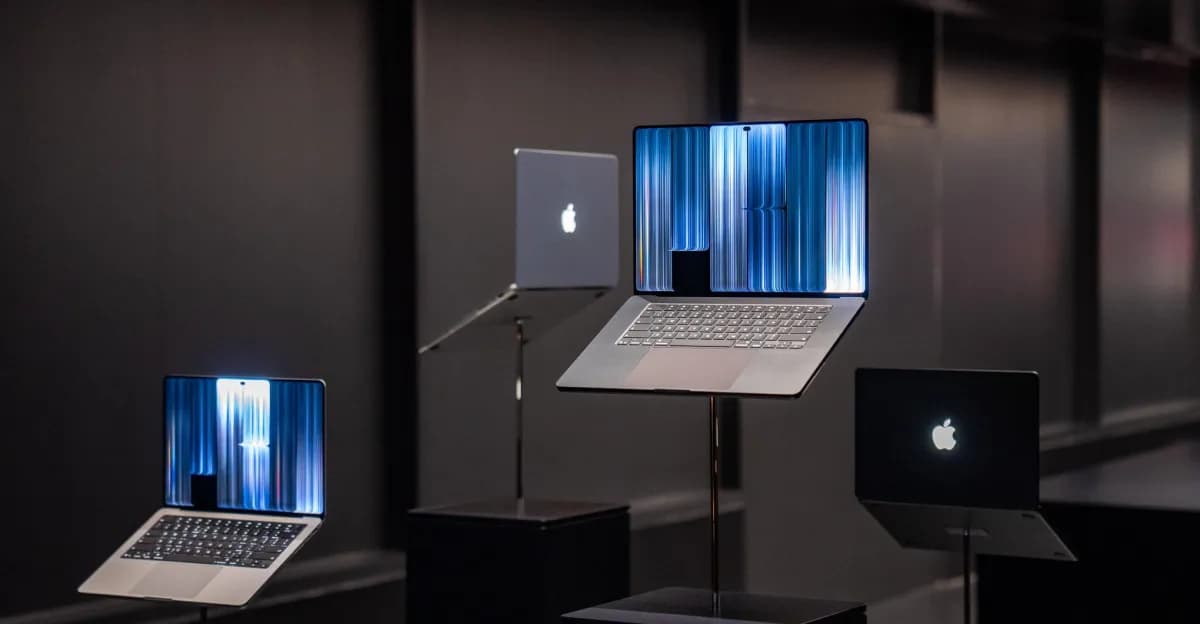
According to The Verge, holiday retail promotions are bringing substantial price cuts across Apple hardware and accessories following a year marked by broader component cost increases. Major holiday sales events frequently offer the most reliable windows for consumers to purchase AirPods, Apple Watches, and Mac systems without paying full retail rates.
These seasonal reductions arrive just in time to counterbalance price bumps enacted earlier in the year across several core product categories. Shoppers evaluating current promotions can also take advantage of direct retailer discounts alongside manufacturer gift card offers running from November 27th through November 30th.
Many consumers assume that holiday electronics shopping requires sorting through unpredictable markdowns on discontinued stock, but current sales target brand-new flagships. Recent equipment releases like the Apple Watch Series 12 and the newly introduced touchscreen MacBook Pro models have already dropped to unprecedented lows across major distributors. Unpacking the actual pricing structure reveals a nuanced trade-off between direct cash discounts from third-party vendors and Apple’s own promotional gift card bundles.
Understanding these financial mechanisms helps buyers decide whether an immediate price slash or a future-use store credit provides better overall value.
Component shortages that began in early 2023 forced Apple to raise the bill of materials for several devices, especially the silicon chips that power the latest Macs. Those cost pressures filtered down to retail prices, making the holiday window the only realistic chance for many shoppers to stay under budget.
Comparing Direct Retail Discounts With Manufacturer Gift Card Bundles
Navigating seasonal tech sales demands a clear look at how different purchasing channels structure their incentives. Apple is running a four-day promotional window through November 30th offering up to $300 in store gift cards depending on total transaction volume. Buyers spending smaller amounts on accessories or entry-level iPhones can secure up to $100 back, while top-tier purchases like the 16-inch MacBook Pro trigger the maximum $300 reward.
Independent retailers often bypass gift card hurdles entirely by offering direct cash discounts upfront at checkout.
How Retailer Cash Discounts Stack with Apple Gift Cards
Some chain stores add a flat 5% off the sticker price on every Apple product, then let the Apple gift card sit on top of that discount. In practice, a $2,199 MacBook Pro that drops to $2,089 after the store’s cut still qualifies for a $250 Apple card, pushing the effective cost below $1,850.
Other outlets, such as authorized resellers, apply tiered markdowns that increase as the basket grows. A $1,099 iPad that lands at $999 after a $100 store discount also earns a $50 Apple gift card, delivering a net saving of roughly $150 when the card is spent on future accessories.
Evaluating MacBook and iPad Price Adjustments Across Retailers
Apple's laptop lineup sees varied promotional traction depending on the specific model tier and built-in silicon. The entry-level laptop configuration utilizes the A18 Pro chip alongside a 13-inch display and 8 GB of RAM, positioning it as an accessible daily driver for students. Meanwhile, the latest MacBook Air features the M5 chip, a doubled 512 GB base storage capacity, and enhanced battery endurance despite its elevated base price.
Retailers such as BestTech and TechHub list the Air at $1,299 after a $150 discount, while the same model on Apple.com stays at $1,449 before the gift-card credit. For the 16-inch MacBook Pro, a $3,499 sticker can fall to $3,199 at select stores, then qualify for the $300 Apple card, effectively delivering a 10% discount when the credit is applied to a future purchase.
Tablet buyers also see movement with the 11th-generation iPad, which doubles its baseline storage to 128 GB, integrates an A16 chip, and ships in four distinct colorways. A $749 baseline can dip to $699 at a regional electronics chain, and the purchase still unlocks a $50 Apple gift card that can fund a pair of AirPods.
Assessing Wearables, Audio Gear, and Fitness Tracker Markdowns
Audio hardware and wearable tech represent some of the most heavily discounted categories during current promotional windows. The Apple Watch Series 12 introduces advanced capabilities like AI-powered sound recognition alerts, Live Rewind, Siri Recap, and continuous five-second heart-rate tracking. Subsidiary brand Beats also features prominently with fitness-focused earbuds equipped with ear hooks, built-in heart monitoring, and the H2 chip.
Over-ear alternatives like the Beats Studio Pro and Beats 360 deliver high-end noise cancellation and removable cushions for gym environments. A $399 Beats Studio Pro can be found for $349 at a major department store, while the same model on Apple’s site retains the $399 price but adds a $30 gift card that can be used toward a Beats Powerbank.
Image: theverge.comThe Reality of Accessory Ecosystem Pricing and Power Bank Alternatives
Shoppers often overlook smaller peripherals when calculating overall holiday spending, yet accessories accumulate quickly. Apple's updated AirTags bring upgraded ultra-wideband chips, louder built-in speakers, and extended Bluetooth range for more reliable item tracking. For desktop users, the Apple Studio Display pairs a 5K Retina panel with a 12-megapixel Center Stage camera and a six-speaker spatial audio system, though connectivity remains limited to two Thunderbolt 5 ports and two USB-C ports.
Power Solutions and Qi2 Fast-Charging Performance
Portable power accessories have emerged as a major focus for holiday tech buyers seeking faster device charging speeds on the move. Third-party power banks like the Baseus PicoGo AM52 deliver 10,000 mAh capacity with 25 W Qi2 wireless charging and up to 45 W wired output via an integrated USB-C cable.
Alternative hardware options like the Icemag 3 combine a transparent aesthetic with RGB lighting, foldable kickstands, and identical 25 W wireless delivery speeds.
These portable charging units frequently offer faster recharge metrics for flagship smartphones than stock wall adapters while remaining heavily discounted.
Accessory Bundles and Compatibility Considerations
Many retailers bundle a spare USB-C cable, a magnetic charger, and a set of silicone cases with a discounted MacBook Air, raising the perceived value without altering the core price. However, the Apple-branded USB-C charge brick still costs $79 when bought separately, so the bundle’s savings hinge on whether the buyer would have needed those extras anyway.
Similarly, third-party Bluetooth speakers that claim “Apple-compatible” often lack the seamless handoff feature that Apple’s HomePod mini provides. A $149 speaker that appears in a holiday bundle may save $30 off the list price, but the buyer must weigh the loss of ecosystem integration against the cash discount.
Image: theverge.comStrategic Purchasing Decisions for Holiday Tech Buyers
Approaching seasonal sales with a fixed budget prevents impulse purchases driven by temporary marketing banners. Consumers must weigh the immediate gratification of third-party cash savings against the utility of manufacturer gift cards that lock future spending into a single ecosystem. Factoring in actual hardware specifications—such as storage tiers, processor generations, and accessory compatibility—ensures that holiday purchases meet long-term daily computing needs without unnecessary expenditure.
Timing Purchases Within the Four-Day Window
Apple’s gift-card program resets at midnight on November 30th, meaning shoppers who wait until the final day risk missing the highest-value tier. Early-bird buyers who spend $2,000 on a MacBook Pro and a pair of AirPods on November 27th automatically qualify for the $300 card, while those who wait for a potential price drop may only earn $200 if the total falls below the $1,800 threshold.
Retailers, on the other hand, tend to release their deepest cash discounts on the second day of the window, hoping to capture traffic after the initial hype. Checking both Apple’s site and at least two authorized sellers before finalizing a cart can reveal a $50-$100 difference that matters for a tight budget.
Calculating True Savings After Gift Card Redemption
To gauge whether a gift-card incentive beats a cash discount, shoppers should project their next purchase. If a buyer plans to buy a $199 pair of AirPods within the next three months, a $50 Apple card effectively reduces the AirPods price by 25%. By contrast, a $30 cash discount on the same AirPods offers a flat 15% reduction but leaves no credit for future upgrades.
For families that already own multiple Apple devices, the cumulative effect of several $100-$300 cards can fund a new iPad or cover the cost of an AppleCare+ plan, turning a seemingly modest incentive into a substantial long-term saving.
Ultimately, the holiday tech rush rewards those who map out their desired devices, compare retailer markdowns side by side, and run the numbers on gift-card value before clicking “Buy.” The four-day window closes on November 30th, and the next round of Apple promotions won’t appear until the following year’s back-to-school season.
The Morning Brief
One email a day with the stories that matter. Free, forever.
No spam. Unsubscribe anytime.
Comments (0)
Be the first to share your thoughts.