
Zelenskyy Rejects Trump's Friendly Stance on Putin, Comparing Rhetoric to WWII Appeasement
Volodymyr Zelenskyy criticized President Trump for calling Vladimir Putin a friend, describing the Russian leader as an aggressor and a killer.
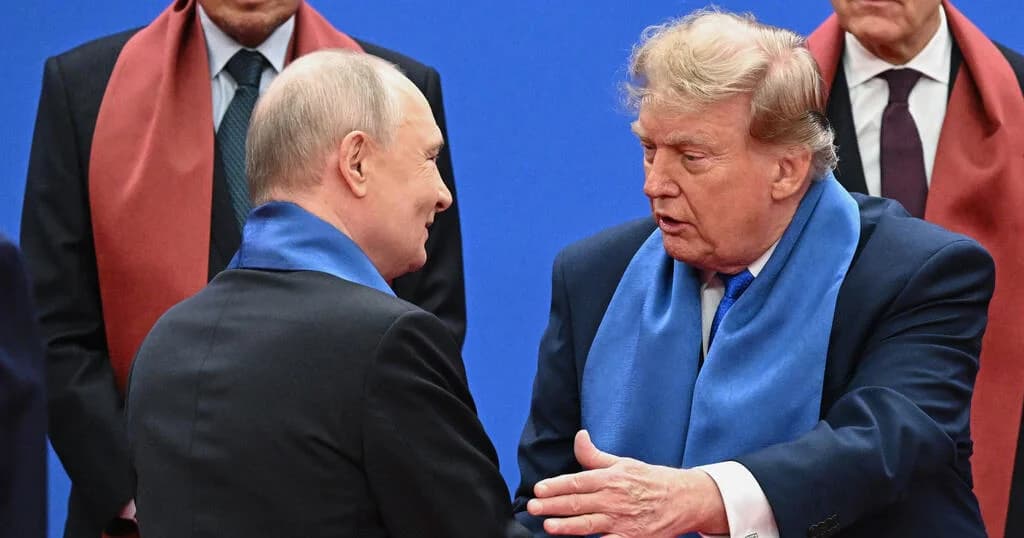
On Tuesday, a CBS News segment aired a clip of President Trump referring to Russian President Vladimir Putin as “a friend,” a comment that quickly sparked diplomatic backlash.
According to CBS News, Ukrainian President Volodymyr Zelenskyy has sharply criticized President Trump's characterization of Vladimir Putin as a friend. The diplomatic rift comes as European leaders struggle to finalize future financial commitments for Kyiv.
Speaking from Kyiv in a broadcast interview, Zelenskyy labeled the U.S. presidential remarks as strange. He argued that applying friendly terms to an adversary responsible for ongoing casualties undermines the reality of the conflict.
Clash Over Diplomatic Tone and Historical Analogies
The friction underscores a widening gap between Ukrainian leadership and Washington mediators over how to handle the Kremlin. Zelenskyy rejected any diplomatic neutrality toward Moscow.
Comparing Leadership Rhetoric to Historical Precedents
Zelenskyy argued that treating the Russian leader with warmth ignores the scale of civilian casualties and infrastructure damage. He pushed back against the administration's current approach to negotiations.
He can't be a friend.
— Volodymyr Zelenskyy, President of Ukraine
The Ukrainian leader maintained that attempts to stay neutral between an invader and a sovereign victim only serve to complicate peace efforts. He called on Washington to apply direct pressure rather than pursuing diplomatic accommodation.
Washington's Defense of Negotiation Tactics
President Trump defended his phrasing when questioned by reporters regarding his choice of words. The U.S. administration maintains that keeping communication channels open remains essential to stopping the violence.
Trump pointed to personal animosity between the two wartime leaders as a primary barrier to any lasting settlement. Envoys Jared Kushner and Steve Witkoff have previously offered complementary assessments of Russian political strategy during mediation talks.
Escalating Aerial Bombardment and Regional Spillover
On the ground, aerial attacks have intensified across multiple regions. Monitoring data from the Armed Conflict Location & Event Data Project records close to 300 Russian aerial strikes per week targeting civilian facilities.
Air Defense Interceptions and Civilian Toll
The Ukrainian air force reported intercepting 110 of 155 drones launched in a single overnight barrage. Prime Minister Serhii Koretskyi confirmed that strikes hit 27 locations across nine regions, killing at least one person and injuring six others.
At the same time, Ukrainian retaliatory drone strikes reached deep into Russian territory. Independent outlet Astra reported explosions across eight districts in St. Petersburg, with local officials confirming two deaths and six injuries from incoming drone activity.
Diplomatic Management of Cross-Border Operations
A recent Ukrainian naval strike in Libya sparked international concern about the war expanding beyond Eastern Europe. Ukrainian Foreign Minister Andrii Sybiha moved quickly to reassure Libyan officials.
Sybiha held phone discussions with Libyan Foreign Minister Al-Taher Al-Baour to clarify that Kyiv has no intention of drawing North African nations into the conflict. Meanwhile, European Union officials remain deadlocked over a proposed $49 billion loan package to sustain Ukraine's operations next year.
Aid Negotiations and European Unity
European capitals have been wrestling with how to fund Ukraine while keeping domestic fiscal pressures in check. The stalled $49 billion loan reflects divergent views on conditionality and oversight.
Stalled Loan Talks
Germany and France have pressed for stricter audit mechanisms before releasing additional funds. Their position clashes with the United Kingdom’s push for rapid disbursement to keep front-line units supplied.
Poland, a frontline donor, warned that any delay could jeopardize winter stockpiles of ammunition and medical supplies. The impasse has forced Ukraine to tap emergency reserves, stretching already thin logistics chains.
Conditionality and Oversight
EU officials argue that transparency safeguards against corruption and ensures aid reaches intended recipients. Ukrainian ministries, however, claim that layered reporting slows critical procurement.
In response, Kyiv’s Ministry of Finance proposed a joint monitoring board staffed by EU auditors and Ukrainian officials. The proposal aims to balance speed with accountability, but consensus remains elusive.
Domestic Political Fallout in Ukraine
Inside Kyiv, Zelenskyy’s sharp rebuke of Trump has ignited debate among opposition lawmakers. Some parliamentarians view the president’s stance as a necessary assertion of sovereignty.
Parliamentary Debate
Members of the opposition bloc demanded a formal resolution condemning “any language that normalizes aggression.” They cited recent attacks on civilian hospitals as evidence of the Kremlin’s disregard for humanitarian law.
Pro-government deputies countered that focusing on rhetoric distracts from battlefield realities. They urged the legislature to prioritize funding for reconstruction projects in war-torn oblasts.
Public Opinion
Recent polls indicate that a majority of Ukrainians support a hard-line approach toward Russia. Respondents cited rising casualty figures and the destruction of cultural landmarks as key concerns.
Yet a notable minority expressed fatigue over endless conflict and called for renewed diplomatic channels. Analysts warn that public sentiment could shift if aid shortages become acute during the winter months.
Broader Geopolitical Calculus
NATO allies have been watching the diplomatic spat for clues about future coalition cohesion. The alliance’s next summit will address how to maintain a unified front amid divergent national interests.
NATO’s Strategic Posture
U.S. defense officials emphasized that open lines of communication with Moscow do not equate to appeasement. They highlighted joint exercises in the Baltic region as a signal of collective resolve.
Eastern European NATO members, however, pressed for a more aggressive posture, citing recent missile deployments near their borders. The internal debate underscores the alliance’s challenge of balancing deterrence with diplomatic outreach.
Russia’s Response
Russian state media rebuked Trump’s “friend” comment as an attempt to sow discord among Western partners. Kremlin spokesperson Dmitry Peskov warned that perceived softness could embolden Kyiv’s offensives.
In parallel, Moscow announced the deployment of additional air-defense systems to protect critical infrastructure in the southern region. The move signals a willingness to intensify the aerial campaign if diplomatic pressure mounts.
Implications for Future Negotiations
The clash over language may shape the contours of any eventual peace talks. Zelenskyy’s insistence on unequivocal condemnation of aggression could set a non-negotiable baseline.
Conversely, the United States may continue to leverage personal rapport with Putin as a back-channel tool. If both sides maintain these opposing tracks, the diplomatic landscape could remain fragmented for months to come.
The Morning Brief
One email a day with the stories that matter. Free, forever.
No spam. Unsubscribe anytime.
Comments (0)
Be the first to share your thoughts.