
Fleeing Murder Suspect Arrested After Scooter-Elephant Collision in Sri Lanka
A 49-year-old murder suspect in Sri Lanka was arrested after crashing his getaway scooter into a wild elephant.
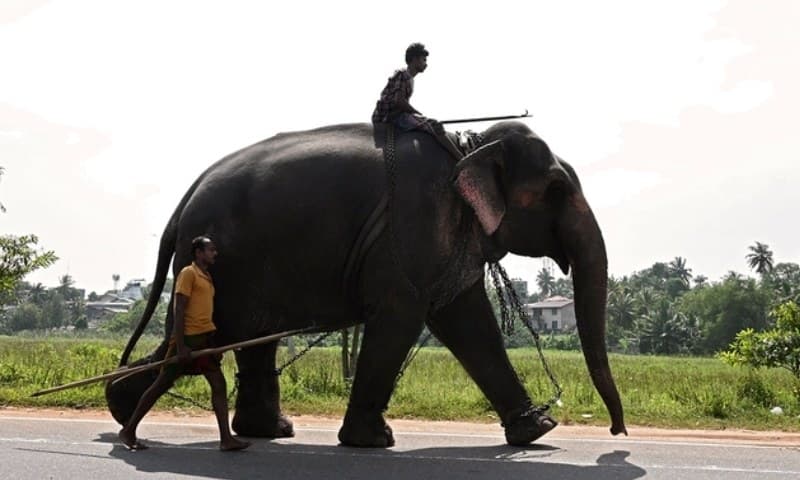
According to Dawn and Channel NewsAsia reporting, an estimated 7,000 wild elephants inhabit Sri Lanka, yet few encounters end quite like a Friday night pursuit in the northern district of Anuradhapura. A 49-year-old man fleeing police after a fatal stabbing crashed his scooter directly into a wild animal emerging from the jungle.
The unexpected collision cut short the suspect's escape route and landed him in a hospital bed under armed guard.
Reconstructing the Anuradhapura Escape and Animal Collision
Local law enforcement officials confirmed that the sequence of events began inside a residential home where a woman was fatally stabbed. The suspect immediately fled the scene on a two-wheeler, attempting to navigate rural roads in the northern district. Within minutes, the getaway route intersected with an unexpected wildlife hazard.
Timeline of the Friday Night Pursuit
Police received the emergency call at 22:13, dispatched two patrol units, and arrived at the victim’s house by 22:18. The suspect mounted a scooter at 22:20, racing north on a narrow, unlit lane that skirts a protected forest reserve. At roughly 22:26, the scooter struck an elephant that had just left the tree line.
Eyewitness Accounts from the Roadside
Three local farmers reported hearing a loud thud followed by a startled trumpet from the jungle. One witness said the animal “stopped, looked at the scooter, then turned and vanished into the trees.” Another added that the rider “didn’t have time to brake; the scooter tipped and the man was thrown forward.”
Police Procedure After the Collision
Officers secured the scene within five minutes, noting no visible injury on the elephant. They administered first aid, then called an ambulance for the suspect, whose leg and shoulder appeared bruised. The murder weapon, a kitchen knife, lay near the scooter’s handlebars and was bagged as evidence.
Hospitalization and Guarded Recovery
The impact left the fleeing rider with unspecified injuries requiring immediate medical intervention. Police officers arrived shortly after the collision to secure the site and take the suspect into custody. Authorities confirmed they recovered the suspected murder weapon at the scene and placed the injured man under armed guard at a local medical facility.
Quantifying Sri Lanka's Persistent Human-Wildlife Conflict
The unusual collision highlights a much larger, ongoing crisis across rural sectors in South Asia. Expanding human settlements and encroaching agricultural farms frequently overlap with traditional animal pathways. These overlapping boundaries generate high-stakes friction between villagers and protected wildlife populations.
Elephant Mortality Trends Over Five Years
Official government figures demonstrate the severe toll of this territorial overlap. Over the past 5 years, the island nation has recorded an average of roughly 400 elephant deaths annually alongside approximately 150 human fatalities each year. These numbers illustrate a persistent, lethal pressure on both sides of the habitat divide.
Human Fatalities Linked to Elephant Encounters
Data from the Department of Wildlife Conservation shows that most human deaths involve farmers working at night or motorists on poorly lit roads. In 2022 alone, 38 people died after being trampled or crushed, a spike that coincided with a drought-driven migration of herds toward cultivated fields.
Economic Impact on Rural Communities
Crop loss from elephant raids costs Sri Lankan farmers an estimated $12 million per year, according to a study by the University of Peradeniya. Families often face bankruptcy after a single night of destruction, prompting some to install electric fences that can cost up to $4,000 each. The expense forces a hard choice between livelihood and wildlife protection.
Government and Conservation Group Responses
Following the Anuradhapura incident, officials convened an emergency meeting to assess gaps in road safety and wildlife management. The Ministry of Environment pledged a review of existing corridors and announced a pilot program to install motion-activated warning signs on high-risk routes.
Policy Review After the Incident
Minister Ranil Wickremesinghe ordered a task force to map all known elephant pathways within a 20-kilometer radius of major highways. The group will recommend speed-limit reductions and mandatory lighting upgrades for roads that cut through forest edges. Draft legislation is expected to reach Parliament by early 2025.
Community Outreach and Compensation Schemes
Non-governmental organizations such as Wildlife Trust Sri Lanka have launched a series of village workshops. These sessions teach farmers how to use non-lethal deterrents, like chili-filled trenches, and explain the compensation process for damaged crops. Since the program began in 2023, participating villages report a 12 percent drop in elephant-related losses.
Funding for New Wildlife Corridors
International donors, including the World Bank, have earmarked $45 million for the creation of “green bridges” that allow herds to cross highways safely. The first structure will be built over the A12 road near Anuradhapura, slated for completion in late 2026. Early models in India have reduced vehicle-elephant collisions by more than half.
While the scooter-elephant crash captured headlines, it underscores a deeper clash between development and conservation. As roads expand and farms push outward, each new encounter tests the limits of Sri Lanka’s legal protections and the resilience of its rural populace.
The Morning Brief
One email a day with the stories that matter. Free, forever.
No spam. Unsubscribe anytime.
Comments (0)
Be the first to share your thoughts.