
Trump Backs Iraqi Prime Minister Ali al-Zaidi in Centralized State Control Push
US President Donald Trump endorsed Iraqi Prime Minister Ali al-Zaidi's efforts to centralize state control, sparking friction with Kurdish authorities and militias.
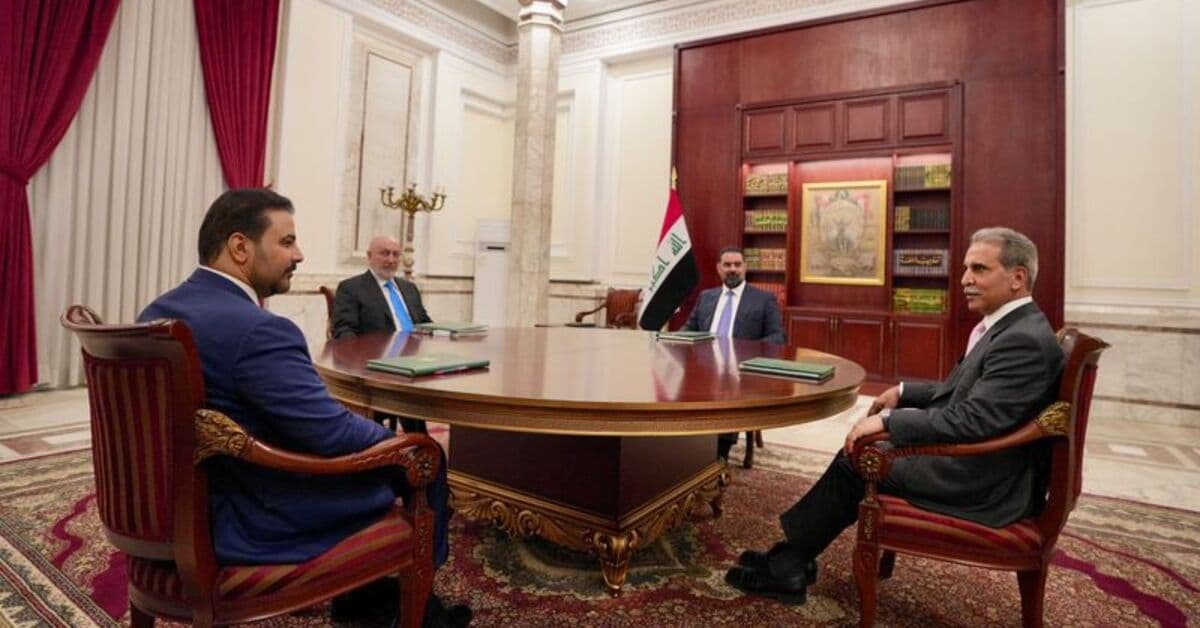
According to Reuters, US President Donald Trump on Friday voiced public support for Iraqi Prime Minister Ali al-Zaidi’s campaign to assert centralized authority across the nation. The endorsement centers on efforts to curb illicit crude shipments, eliminate state corruption, and consolidate military hardware under federal command. These aggressive policy directives place Baghdad squarely in diplomatic and physical friction with Iran-backed militias and Kurdish regional authorities alike.
The Friction Between Federal Decrees and Regional Autonomy
Many outside observers assume that central governments in fractured states operate with uniform administrative reach across all provinces. The reality on the ground in Iraq involves competing power centers, semi-autonomous governance models, and decades of entrenched ethno-sectarian militias that control local resources. Prime Minister Zaidi's administration is attempting to dismantle these localized fiefdoms through executive orders and judicial rulings.
Border Closures and Federal Troop Deployments
On Thursday, federal authorities closed two strategic border crossings in the Kurdistan region—one linking to Syria and another to Iran—following orders from Zaidi to strip regional managers of border oversight. This operational pivot came on the heels of a Wednesday ruling from Iraq's highest court authorizing federal troop deployments along all international boundaries within the Kurdistan region.
Thousands of local residents protested the deployment of federal forces and the seizure of oilfields, highlighting the immediate resistance to central oversight. Merchants in Irbil and Sulaimaniya report that commercial transit has slowed to a crawl since military engineers installed concrete checkpoints along the highway junctions. Customs officials appointed by Baghdad now demand manifest inspections that regional authorities previously handled independently.
Local trade chambers argue that these sudden closures violate regional constitutional privileges and penalize civilian merchants who depend on unhindered cross-border commerce. Federal commanders counter that unregulated border gates function as porous arteries for contraband and unauthorized weapons shipments. Military convoys continue to patrol the perimeter, signaling that Baghdad won't back down from its territorial enforcement timeline.
Controlling Crude Flows and Dismantling Smuggling Networks
At the heart of the federal strategy is a crackdown on hydrocarbon transactions that bypass the state oil marketer, SOMO. Iraqi government spokesman Haider al-Aboudi stated that crude exports circumventing SOMO constitute direct smuggling because revenues fail to reach the state treasury. Aboudi told the state news agency that Iraq lost an estimated $100 billion to oil smuggling through the Kurdistan region between 2008 and 2025.
This multi-billion-dollar drain severely undermines foreign investment goals for the broader economy. International energy firms currently operating in northern fields face severe compliance pressures as SOMO audits past export ledgers and demands direct delivery contracts. Pipeline flow meters that historically operated outside federal inspection now stream telemetry data directly to ministry dashboards in Baghdad.
Energy analysts note that independent oil sales provided the Kurdistan Regional Government with vital financial breathing room during past budget disputes with the central ministries. Cutting off those independent streams starves regional payrolls and forces local officials to negotiate fiscal transfers under duress. Tanker trucks carrying unverified crude have been impounded at roadside depots while federal auditors verify bills of lading.
Weighing the True Scope of Executive Authority
Public declarations from Washington and favorable court rulings create an appearance of swift administrative consolidation in Baghdad. Yet political analysts warn that translating judicial edicts into enforceable policy across heavily armed territories remains an immense challenge. Zaidi, a 41-year-old multimillionaire businessman and political novice, assumed office just six months ago via a fragile political compromise.
We support Iraqi Prime Minister Ali al-Zaidi’s efforts to assert state authority throughout Iraq, stop the smuggling of Iraqi oil, end corruption, and bring all weapons under the exclusive control of the state,
— Donald Trump, US President
Despite presidential backing, the Kurdistan Regional Government quickly rejected what it termed the military language and threats issued by military spokesmen. The regional administration maintains it wants to combat corruption cooperatively, yet it views federal troop movements as an infringement on autonomous governance. Similar tensions surfaced last week when Zaidi ordered army units toward Jurf al-Sakhar south of Baghdad to confront Kataib Hezbollah over alleged smuggling operations before the militia eventually permitted entry.
Militia Pushback in the Southern Provinces
Beyond the northern mountains, state security forces face entrenched armed groups that operate parallel command structures across the Tigris river valley. Shi'ite factions backed by Tehran view federal inspections of border infrastructure as an existential threat to their logistical networks. Commanders from these groups have deployed armed patrols near municipal administration buildings to signal their displeasure with Zaidi's anti-corruption decree.
Cabinet insiders report that several ministers have quietly urged the prime minister to soften his enforcement deadlines to avoid a violent showdown in the capital's Green Zone. Zaidi's inner circle insists that compromise on sovereign authority is impossible if the state ever expects to collect taxes and issue valid permits. Intelligence chiefs monitor radio traffic closely for signs that militia cells are coordinating defensive maneuvers across provincial lines.
Executive Overreach and Legislative Friction
Lawmakers in the Iraqi parliament have begun questioning whether executive decrees can legally supersede regional revenue-sharing agreements codified in past legislative sessions. Several coalition partners who backed Zaidi's rise to power six months ago are distancing themselves from his unilateral troop deployments. This legislative friction threatens to paralyze budget negotiations just as international lenders demand fiscal transparency.
Business leaders warn that protracted legal battles over oil fields and border gates will freeze foreign direct investment across non-oil sectors. Foreign embassies in Baghdad have issued cautionary travel advisories for personnel visiting contested northern districts where protests frequently turn violent. Zaidi must now convince skeptical coalition allies that centralizing state power generates more economic stability than regional autonomy ever did.
Image: al-monitor.comThe Economic and Geopolitical Stakes for Baghdad
As the central government maneuvers to reclaim fiscal sovereignty, the outcome will dictate whether foreign capital flows freely into a stabilized Economy & Markets ecosystem. Navigating these concurrent showdowns with both Kurdish authorities and powerful Shi'ite factions tests the limits of Zaidi's six-month-old mandate. For a deeper look at regional governance shifts, visit World News for ongoing coverage.
The Morning Brief
One email a day with the stories that matter. Free, forever.
No spam. Unsubscribe anytime.
Comments (0)
Be the first to share your thoughts.