
US Army Destroys 10,000 Pounds of Unstable Explosives in Iowa Amid Contamination Fears
The US Army safely detonated 10,000 pounds of unstable lead azide in Middletown, Iowa, following intense safety preparations and local evacuation warnings.
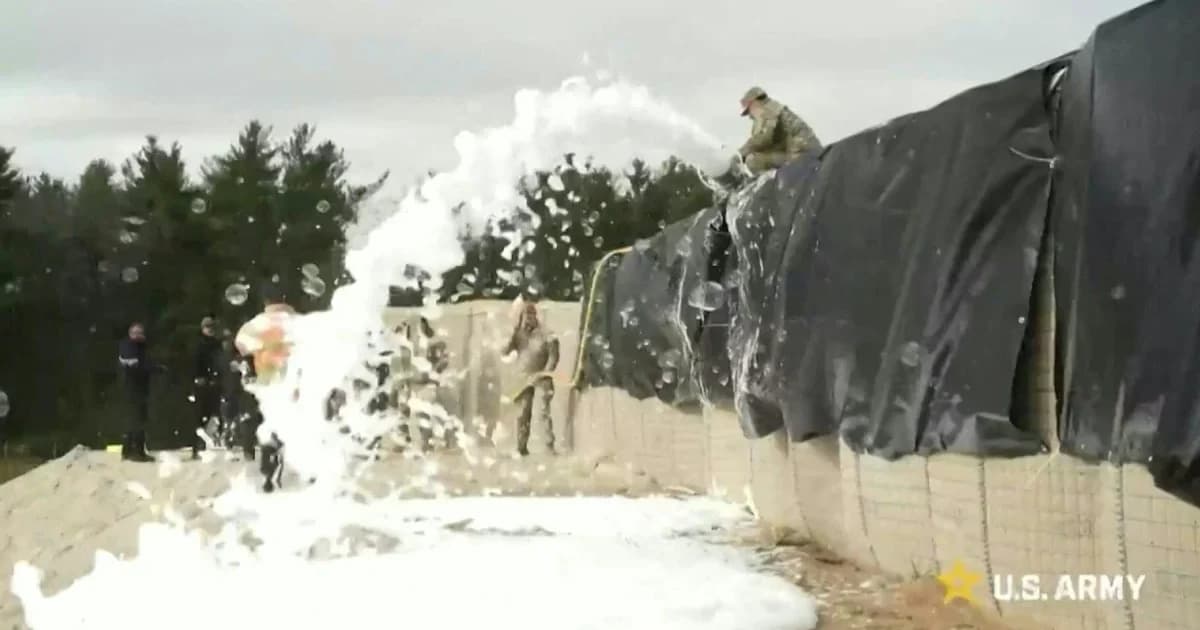
According to Punch, the US Army detonated roughly 10,000 pounds of degraded lead azide in Middletown, Iowa, neutralizing an entire national stockpile of the unstable material that had sat in storage for more than 15 years. The controlled blast, carried out on Wednesday at the Iowa Army Ammunition Plant, triggered urgent local evacuations and intense political debate over public safety protocols. For a rural community accustomed to quiet farming routines, the morning explosion brought a sudden, jarring reality check about what sits in backyard federal bunkers. Local emergency dispatchers fielded hundreds of calls within minutes as the shockwave rattled windows miles from the perimeter fence. Military planners knew the stakes were exceptionally high before the first charge was even wired.
Military officials emphasized that the nearly five tons of material were far too volatile to transport safely over public highways or rail lines. Left in place, the degrading chemical compound faced a growing risk of spontaneous detonation from minor friction or ambient temperature shifts. While environmental monitors watched closely for airborne toxins, the operation concluded with officials reporting zero lead detected in the regional atmosphere. Transporting the substance across state lines would have exposed civilian populations to catastrophic risks along every mile of asphalt. Engineers calculated that even a minor pothole or brake check could trigger a localized disaster en route. Leaving the compound untouched inside aging bunkers simply wasn't a viable long-term strategy for the Army.
The Engineering Challenge of Destroying Decades-Old Lead Azide
Disposing of nearly five tons of unstable lead azide required a massive infrastructure overhaul. Colonel Aaron Teller, who led the explosives experts overseeing the operation, noted that the last comparable disposal occurred in 1977 in Colorado, when roughly 7,000 pounds of the material were destroyed in an open-air blast. Without modern mitigation, that 1970s disposal left 75 percent of lead particulate lingering at the site. The Iowa operation relied on entirely different containment standards. Technicians spent weeks constructing custom mitigation barriers designed to trap heavy metals before they could escape into the open sky. Every component of the blast zone was scrutinized by senior chemical safety officers.
Crews surrounded the storage bunkers with earthen-filled barriers extending well above the magazines, engineering specific vents to channel blast debris into uninhabited acreage. Teams also installed massive water tanks and flooded the exterior of the magazines with specialized foam materials designed to trap particulate matter. These precautions aimed to prevent the environmental fallout historically associated with military chemical disposal. Heavy-duty tarps and trench systems caught runoff water immediately after the blast to prevent soil contamination. The meticulous preparation turned a high-stakes demolition into a controlled scientific test of modern ordnance engineering.
Political Friction and Evacuation Warnings Across Rural Iowa
The path to Wednesday's blast involved multiple scheduling shifts and high-level friction. Initially slated for November 20, the operation was delayed by three days before President Trump paused the timeline again prior to letting it proceed. Officials urged residents in Middletown and the immediate surrounding region to relocate, distributing hazard maps warning that airborne exposure could stretch up to 75 miles southwest of the facility. Local families scrambled to pack overnight bags, turning community centers into impromptu staging grounds for displaced residents. The constant schedule adjustments frayed nerves and left local leaders rushing to update evacuation routes on short notice.
"We reduced as close to zero as is absolutely humanly possible the risk to the health and safety of the people of Middletown and (the) extended communities throughout Iowa."
— Major General Eric Shirley, US Army
Incoming Iowa Governor Rob Sand praised the boots-on-the-ground specialists for executing the high-risk detonation safely, though he criticized the chaotic lead-up. Meanwhile, federal lawmakers traded sharp words regarding the Department of Defense. House Speaker-designate Hakeem Jeffries questioned the administration's transparency, arguing that the public deserved clear facts rather than vague assurances from defense leadership. Public trust took a hit as residents tried to decipher conflicting reports about hazard radiuses and shelter-in-place orders. Local mayors demanded better communication channels before any future hazardous waste operations are approved in their jurisdictions.
Environmental Monitoring and the Post-Blast Reality
Following the tremendous roar of the explosion—which reporters heard up to 10 miles away—state and federal regulators turned their focus to air quality data. The US Environmental Protection Agency confirmed that real-time air monitors registered zero detection of airborne lead across the impacted counties. For a broader look at environmental and security matters, readers can explore updates via Security and Climate & Environment. Mobile testing labs fanned out across agricultural fields to capture soil samples before afternoon winds could shift. Farmers anxiously awaited the all-clear signal to resume normal tractor operations and livestock tending.
The successful blast marks the permanent removal of a persistent chemical hazard from a small farming community, closing a 15-year storage chapter that had troubled local safety planners. With the containment systems holding firm and air monitors verifying clean skies, the immediate crisis has subsided, leaving regional leaders to evaluate how federal agencies handle high-risk demilitarization projects moving forward. The empty bunkers now sit vacant, awaiting thorough decontamination and final structural decommissioning by Army engineers. Residents of Middletown can finally sleep without wondering if the decaying stockpile down the road will outlast its containment.
The Morning Brief
One email a day with the stories that matter. Free, forever.
No spam. Unsubscribe anytime.
Comments (0)
Be the first to share your thoughts.