
Lokpobiri's Ministerial Portfolio Stokes 2027 Alignment Battles in Bayelsa
Bayelsa Deputy Governor Peter Akpe says Heineken Lokpobiri's ministerial role and Federal Government ties will boost Tinubu's 2027 re-election bid.
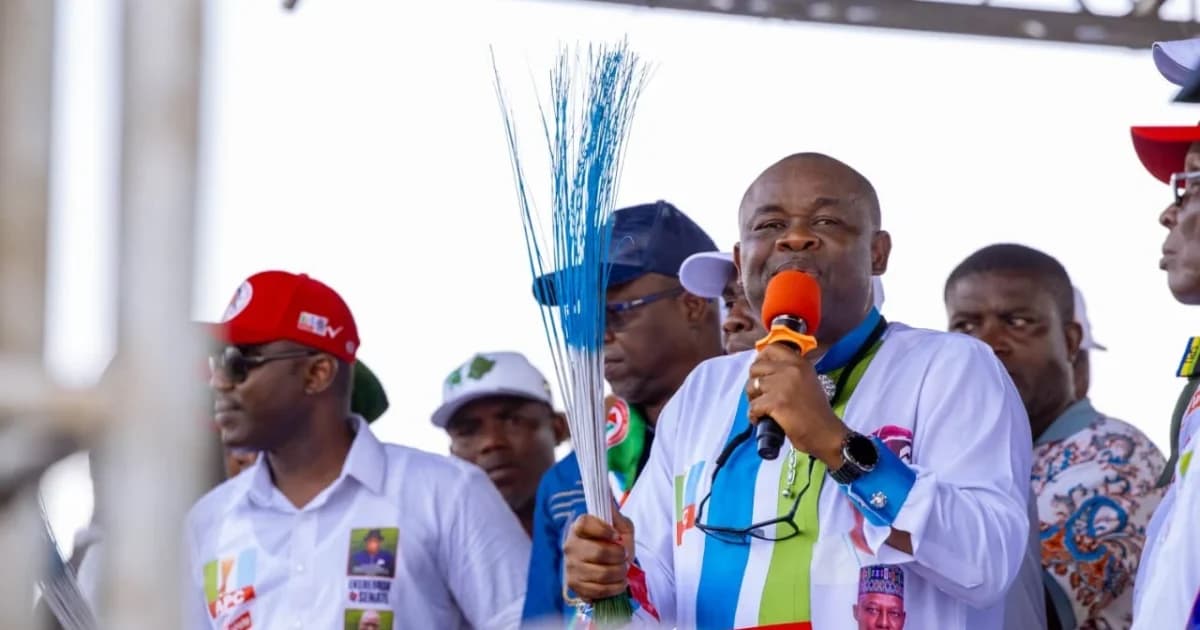
Deputy Governor Peter Akpe told a crowded rally in Aleibiri that Senator Heineken Lokpobiri’s appointment as Minister of State for Petroleum Resources (Oil) gives President Bola Tinubu a concrete lever for the 2027 campaign. He argued that the minister’s portfolio opens a pipeline of projects that can be showcased as direct federal gifts to Bayelsa voters. The message tied personal ambition to a promise of visible development.
The APC’s pre-campaign sensitisation tour cut through the Bayelsa West Senatorial District, stopping in Aleibiri, Ebedebiri, and Agbere. Party officials used the three venues to rally local cadres, hand out flyers, and map out voter outreach routes. Each stop featured a brief address by Akpe followed by a question-and-answer session that lasted under ten minutes.
Observers often write that federal appointments in opposition-leaning states rarely translate into votes. State officials, however, point to a growing record of joint projects that reshape that assumption. The friction stems from a legacy of mistrust between regional powerbrokers and the federal executive in Abuja, a mistrust that can be eased when concrete benefits appear on the ground.
Federal Infrastructure Projects and Payroll Stability as Electoral Anchors
When the federal and state governments line up on a project, the result usually shows up as asphalt, bridges, or new schools. In Bayelsa, officials cite the second phase of the Nembe-Brass Road as a flagship example of that alignment. The road, now 70 percent complete, promises to cut travel time between the two towns by half, opening markets for local traders.
Beyond roads, the administration has stressed the importance of timely salary and pension payments. Workers in the oil-service sector and retirees in the public service reported receiving their dues within a week of the announced schedule. Those payments, officials say, act as a steady vote-buying rhythm that the opposition struggles to match.
The Economic Rationale Behind Subsidy Reforms and Production Bumps
During the Aleibiri rally, Minister of State for Petroleum Resources (Oil) Senator Heineken Lokpobiri defended the administration’s controversial economic trajectory. Lokpobiri argued that the removal of fuel subsidies, though difficult, was necessary to reposition the national economy for sustainable growth. He noted that crude oil production climbed from roughly one million barrels per day to approximately 1.8 million barrels daily, attributing the rebound to targeted security and operational efforts in the sector.
The minister added that higher output translates into more royalties for oil-producing states, a point that resonated with local fishermen who depend on royalty checks. He warned that without the reform, Nigeria could lose up to $3 billion in annual revenue, a loss that would ripple through state budgets.
Roadwork Timelines and Local Job Creation
Project engineers estimate that the Nembe-Brass Road will employ about 1,200 local laborers over the next six months. Those workers receive daily wages that align with the federal payroll schedule, creating a predictable cash flow for households. The road’s completion is slated for early 2025, a timeline that the APC hopes to showcase as a campaign milestone.
Local contractors say the project has spurred demand for cement, steel, and transport services, generating indirect jobs in the supply chain. Small-scale traders report a 30 percent uptick in sales since construction began, a boost they credit to the influx of workers.
Pension Payments as Vote-Buyers
Retirees in Bayelsa’s coastal communities have long complained about delayed pension checks. Since the Tinubu-Diri partnership, the disbursement rate has risen to 96 percent on schedule, according to the state pension board. That reliability has turned many pensioners into vocal supporters of the federal-state alliance.
One retired teacher told reporters that receiving her pension on the first of each month “feels like the government finally remembers us.” Her comment underscores how routine payments can shift political loyalties in a region where patronage has historically dictated voting behavior.
Weighing Opposition Pushback and Court Mandated Primaries
Despite upbeat projections from party executives, the campaign path faces procedural hurdles in local courts. Chief Fidelis Agbiki, the APC flag bearer for Bayelsa West Senatorial District, addressed supporters regarding a Federal High Court ruling in Abuja that directed the party to conduct a fresh primary election within 14 days.
Agbiki urged delegates and supporters to remain focused, assuring them that local structures would comply with judicial directives without losing momentum. He warned that any delay could be exploited by rival parties to sow doubt among undecided voters.
The court’s order stems from a petition filed by a disgruntled aspirant who claimed the original primary violated internal party guidelines. Legal analysts note that such challenges are common in tightly contested districts, where every vote carries outsized weight.
Image: punchng.comDefections and the Arithmetic of Local Party Consolidation
Political momentum in the Niger Delta frequently pivots on high-profile defections from rival platforms. During the Ebedebiri stop, Deputy Governor Akpe welcomed defectors from the Peoples Democratic Party, the Nigeria Democratic Congress, and the African Democratic Congress, assuring newcomers of equal standing within the state apparatus. Campaign managers calculated that absorbing these local networks directly undercuts opposition capacity ahead of the ballot.
Since we are gathered here for this sensitisation, let me tell you that we have the best candidates. Anywhere I go, I announce that even if these candidates were to be selected by the United Nations, they would not select better candidates than these.
— Peter Akpe, Deputy Governor of Bayelsa State
Meanwhile, campaign strategists like former deputy governor and Bayelsa West Campaign Council Director-General Rt Hon Peremobowei Ebebi reported high attendance figures across all tour stops. Local legislative candidates, including Hon Benard Kenebai and Hon Ebizi Ndiomu-Brown, used the rallies to reinforce messaging around local representation. As regional actors align their ambitions with federal patronage, the coming months will test whether administrative cooperation can overcome deep-rooted voting patterns across the Politics and Africa beats.
Strategic Value of Defectors
Defectors bring not only votes but also organizational know-how from their former parties. A senior PDP operative who switched to the APC disclosed that his network controls three local government areas, each with roughly 12 thousand registered voters. By integrating those structures, the APC gains a ready-made ground game that would otherwise take months to build.
The party’s data team mapped the new affiliations, noting a 22 percent rise in projected support in the West district. That increase narrows the margin that opposition candidates previously enjoyed, turning a once-safe seat into a competitive race.
Grassroots Mobilization Metrics
Field officers recorded an average turnout of 1,800 participants per rally, a figure that eclipses the 1,200 average of previous APC events in the area. The surge reflects both the novelty of the federal-state partnership message and the draw of defectors who campaigned for their former parties.
Social-media monitoring shows that hashtags linked to the tour trended locally for six consecutive hours after each stop. The online buzz translated into a 15 percent spike in volunteer sign-ups, according to the campaign’s mobilization chief.
Opposition Counter-Strategies
Opposition leaders have launched a series of town-hall meetings to question the sustainability of the road project and the permanence of payroll reforms. They argue that infrastructure built under one administration can be abandoned by the next, a claim that resonates with voters who recall past broken promises.
In response, APC spokespersons highlighted the binding nature of federal contracts signed with state agencies, noting that termination would incur penalties exceeding $10 million. The financial deterrent, they say, guarantees project continuity regardless of future political shifts.
Looking Ahead to the 2027 Vote
The next six months will see a flurry of constituency visits, door-to-door canvassing, and distribution of project brochures. Party officials plan to roll out a “Roads and Pensions” kit that details the Nembe-Brass timeline and the pension payment schedule, aiming to cement the federal-state narrative in voters’ minds.
If the APC can sustain the current pace of defections, keep payrolls on time, and finish the road on schedule, the coalition could flip several swing districts in the Niger Delta. Failure on any front, however, may reignite the opposition’s narrative of federal neglect and give rivals a chance to reclaim lost ground.
The Morning Brief
One email a day with the stories that matter. Free, forever.
No spam. Unsubscribe anytime.
Comments (0)
Be the first to share your thoughts.