
NDLEA Dismantling of N304bn Enugu Methamphetamine Lab Reveals International Cartel Blueprint
Federal anti-narcotics agents dismantled an industrial-scale methamphetamine lab in Enugu, seizing 1,512kg of drugs and arresting five Mexican nationals.
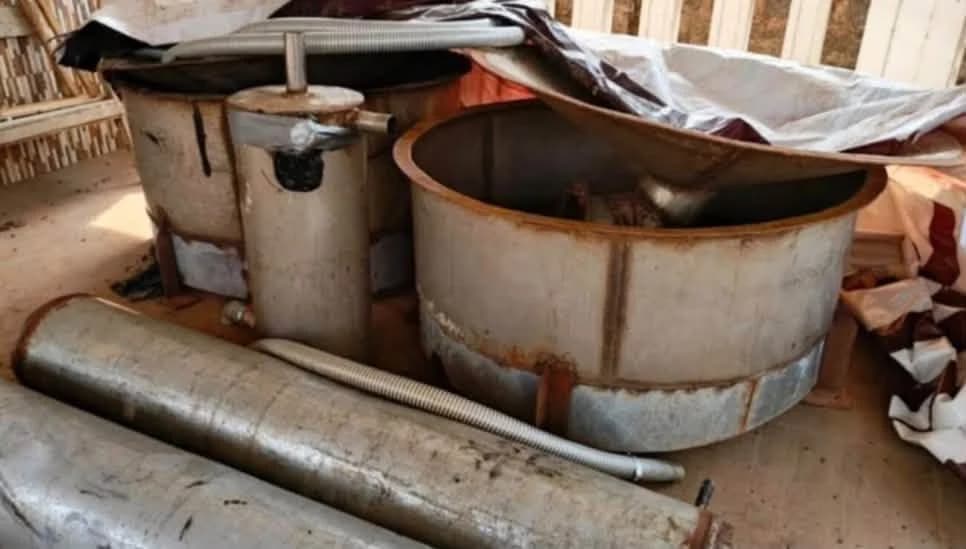
Federal anti-narcotics operatives seized 1,512 kilogrammes of finished methamphetamine and 6.6 tonnes of precursor chemicals during a simultaneous pre-dawn raid in Enugu State. According to reports from Punch, the National Drug Law Enforcement Agency valued the intercepted drug yield at $226.8m, which translates to approximately N303.9bn under current market projections.
The haul marks one of the largest meth seizures in West Africa since the NDLEA began publishing detailed figures in 2015. Analysts say the volume could have supplied several million tablets per month, enough to flood urban markets from Lagos to Abuja. By removing the stockpile, authorities also seized the cash-flow pipeline that typically funds armed groups and local corruption.
Inside the Cartel Operations and Transnational Supply Chain
The raided facility in the San Savanna complex operated as an industrial-scale manufacturing unit deliberately isolated from local involvement. Investigators confirmed that the cartel structure relied on a rigid three-tier hierarchy designed to protect the foreign leadership from exposure. A command base in Mexico handled recruitment and specialist deployment, while Nigerian facilitator Enoch Ezeike managed local infrastructure and chemical procurement.
Structure of the three-tier hierarchy
At the top, a Mexican syndicate board set production quotas and negotiated bulk purchases of restricted reagents. Mid-level managers like Ezeike translated those orders into local contracts with chemical suppliers who often operated under the guise of legitimate laboratories. The bottom tier consisted of rotating chemists and technicians who executed synthesis steps inside the concealed lab.
Logistics and local footprint
The production crew, led by Mexican national Oscar Ramos-Cardenas, rotated members with each deployment to complicate law enforcement tracking. The NDLEA monitored the network for months, using aerial drone surveillance and local informants to map movement between Ezeike's hotel base at Adig Suites and the production facility. Operatives documented the daily transit of a blue Toyota Corolla, a red Toyota RAV4, and a Lexus RX 350 across Enugu before greenlighting the intervention.
Witnesses near the complex reported frequent deliveries of sealed drums at night, a pattern typical of clandestine labs that avoid daytime inspection. The choice of a high-rise hotel for the coordinator allowed quick access to both the city centre and the industrial zone, reducing travel time for the chemists.
The Calculated Surveillance Trap That Snared Foreign Specialists
Agency leadership elected to allow the foreign chemists entry into the country despite prior red flags at border checkpoints. Intelligence officers intercepted five Mexican nationals in Abuja on August 28, 2026, but permitted their subsequent re-entry through land borders using forged passports via Cotonou. This calculated delay enabled investigators to map the entire financial and logistical apparatus rather than catching low-level couriers.
Border manipulation and forged documents
The forged passports bore subtle alterations that evaded automated scanners but were later flagged by a manual audit team. By allowing the suspects to cross into Benin and re-enter Nigeria, officers gained a window to observe their interactions with local money-launderers and transport gangs. The move also forced the cartel to rely on trusted intermediaries, exposing more nodes for surveillance.
Operational patience and strike force deployment
Brig. Gen. Buba Marwa (retd.), Chairman of the NDLEA, explained the tactical reasoning behind the controlled entry during an Abuja press briefing on Wednesday. The agency waited until all operational layers were fully connected before mobilizing over 200 Strike Force personnel.
Rather than turn them back again, I allowed them to come in. We wanted the whole network: the meth specialists, the financier, the factory, and the products.
— Brig. Gen. Buba Marwa (retd.), Chairman, NDLEA
The raid occurred just 48 hours before the Mexican crew was scheduled to exit Nigeria on November 13, 2026. Suspect statements confirmed that the laboratory had completed only a minor initial batch of 49 kilogrammes before federal agents secured the premises.
Following the seizure, the NDLEA seized digital ledgers that traced payments to offshore accounts in Panama and the Cayman Islands. Those ledgers suggest the cartel intended to reinvest profits into new labs in the Niger Delta region.
Data Breakdown of Seized Equipment and Precursor Inventory
Forensic teams cataloged a vast array of industrial hardware and restricted chemical agents designed for continuous synthesis. The inventory reflects heavy capital investment by transnational syndicates seeking to bypass maritime shipping risks by establishing domestic production hubs within West Africa.
Scale of chemical stockpile
- Precursor Chemicals: 2,835 kg of lead acetate, 1,050 kg of tartaric acid, 450 kg of mandelic acid, 160 kg of P2P, and 70 kg of methylamine alongside other agents.
Lead acetate and P2P serve as key intermediates that convert raw materials into the meth base. The presence of over 70 kg of methylamine indicates the cartel intended to run multiple synthesis cycles without needing fresh shipments.
Industrial hardware and its significance
- Manufacturing Hardware: Four industrial burners, two distillation units, two heavy boilers, two hydraulic presses, and 11 pressurized gas cylinders.
- Processing Gear: Two industrial freezers, two digital scales, and four washing and drying units configured for high-volume output.
Each burner can sustain temperatures above 300 °C, a range required for efficient conversion of P2P to methamphetamine. The hydraulic presses suggest the operation also produced solid-state forms for easier transport.
Arrests and legal processing
- Arrest Metrics: Five Mexican nationals apprehended on-site, one Nigerian coordinator detained at a separate hotel, and ten total Mexican specialists jailed over a four-month window.
The detained Mexican nationals face charges under Nigeria’s Narcotic Drugs and Psychotropic Substances (NDPS) Act, which carries a maximum sentence of life imprisonment. The Nigerian facilitator is slated for a separate trial that could include asset forfeiture and a travel ban.
Quantitative Skepticism and the Wider Enforcement Reality
While the N303.9bn valuation commands attention, economic analysts and security researchers urge caution regarding wholesale street-value metrics. Seizure valuations calculated by narcotics agencies typically multiply maximum potential retail yields across fragmented international markets rather than capturing realized wholesale revenue. The actual capital recovered lies in physical assets, real estate holdings, and frozen bank accounts tied to the syndicate.
Valuation methodology and its limits
Experts note that street-level prices for meth in Nigeria hover around $30 per gram, but wholesale contracts often settle near $10 per gram. Multiplying the seized 1,512 kg by the higher figure inflates the headline number. Moreover, the valuation does not account for the loss of future profits once the lab is dismantled.
Geographic spread of labs and future risk
Furthermore, the dismantling of four industrial labs across Enugu, Ogun, Oyo, and Ebonyi forests in four months signals an aggressive pivot by foreign cartels toward decentralized Nigerian production nodes. As Security agencies ramp up border scrutiny, cartels continue testing land-border vulnerabilities in neighboring West African states. The long-term efficacy of these raids depends on whether asset forfeiture sweeps dismantle the underlying financing networks or simply force production cells deeper into rural sanctuaries.
Local communities near the former lab sites have reported a sudden drop in unexplained cash flows and a rise in police presence. Residents fear that abandoned infrastructure could attract smaller gangs looking to repurpose the equipment. Authorities have pledged to conduct joint inspections with state governments to secure the sites and convert them into community centers.
In the weeks ahead, the NDLEA plans to release a detailed forensic report and to coordinate with Interpol for the recovery of the offshore funds identified in the seized ledgers. If the financial trail leads to a successful asset freeze, the operation could deliver a dual blow: cutting both supply and money streams.
The Morning Brief
One email a day with the stories that matter. Free, forever.
No spam. Unsubscribe anytime.
Comments (0)
Be the first to share your thoughts.