
Nigeria's Electoral Register Hits 100 Million as INEC Purges 1.6 Million Invalid Records
INEC reports Nigeria's verified voter register has settled at over 100 million following the removal of 1.6 million invalid records ahead of the January 2027 polls.
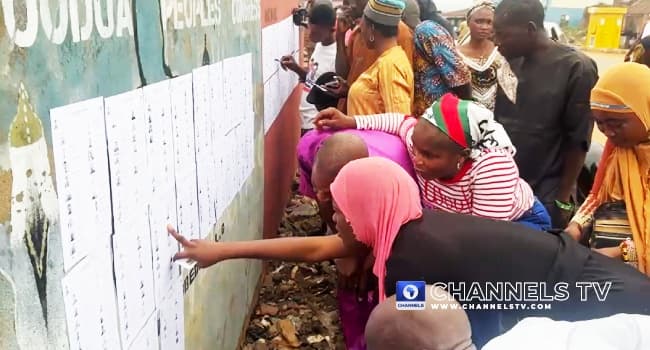
According to Channels Television, Nigeria's electoral landscape has crossed a significant administrative milestone as the Independent National Electoral Commission (INEC) finalized a verified voter roll totaling over 100 million citizens. The milestone follows a sweeping data purge that removed more than 1.6 million invalid, duplicated, and deceased entries ahead of the general election slated for January 2027.
The new figure represents roughly half of the nation’s estimated 200 million residents, a ratio that underscores the scale of the task INEC faced. By tightening the register, the commission hopes to curb the “ghost voter” phenomenon that has plagued past contests and to reassure observers that each ballot will correspond to a living, eligible voter.
The update was announced in Abuja by INEC Chairman Prof. Joash Amupitan during a strategic meeting with Resident Electoral Commissioners spanning the 36 states and the Federal Capital Territory. The nationwide clean-up relies on the deployment of advanced biometric filters and systematic public claims audits, setting the stage for a high-stakes test of the nation's democratic infrastructure.
Amupitan’s briefing emphasized that the purge was not a one-off operation but the latest phase of a multi-year effort to modernize Nigeria’s voter database. He warned that any lapse in data integrity could invite legal challenges once the polls open.
The Mechanics Behind the Automated Purge and Duplicate Removal
Conventional wisdom often assumes that national voter databases expand indefinitely without contraction, accumulating legacy errors over successive election cycles. The reality revealed in Abuja demonstrates a deliberate contraction. INEC utilized the Automated Biometric Identification System (ABIS) alongside a statutory claims-and-objections audit to strip out compromised records that had lingered on the registry for over a decade.
How ABIS Detected Overlapping Facial Captures
ABIS cross-checked each enrollee’s facial template against every other entry stored between 2011 and 2023. When the algorithm flagged two records with a similarity score above 98 percent, technicians reviewed the pair manually. In many cases, the same individual had been registered at a university enrollment office and later at a local government office, creating a duplicate that inflated the tally.
The system also scanned for text anomalies such as names that repeated the same letter sequence (e.g., “Aaaabbb”). Those patterns often signal placeholder entries or data-entry errors, prompting a deeper audit.
The cleanup knocked the national voter tally down from an earlier peak of 103 million to the current verified baseline of over 100 million. Commission engineers targeted glaring anomalies in records compiled between 2011 and 2023. These included incomplete text entries—such as repetitive letter patterns—and biometric overlaps where a single individual appeared with identical facial captures across multiple registration points.
Public Claims Window and the Scale of Citizen Feedback
During the statutory claims-and-objections period, citizens could submit grievances via online portals, SMS, or physical forms at registration centres. The commission logged hundreds of thousands of such complaints, a volume that reflected both genuine concerns and attempts at political manipulation.
Amupitan noted that out of more than 11 million individuals who registered across three phases of the Continuous Voter Registration (CVR) since 2025, exactly 10.77 million new registrants were successfully retained after rigorous cross-matching. The commission also processed hundreds of thousands of citizen complaints submitted during the public display window.
"We addressed those complaints and we found that about 232,000 of those complaints were found to be genuine and we’ve been able to address those issues."
— Prof. Joash Amupitan, Chairman, Independent National Electoral Commission
Beyond these public grievances, internal audits uncovered an additional 113 problematic entries directly on the supplementary register. By confronting these legacy data corruptions head-on, the commission attempts to rebuild foundational trust in the database before voters step up to the African nation's ballot boxes.
Assessing the Measured Reality of Hardware Readiness and Logistics
Critics frequently warn that digital roll updates exist merely on paper while physical infrastructure languishes. The numbers tell a different story regarding physical deployment. INEC has dispatched 57,000 newly procured Bimodal Voter Accreditation System (BVAS) devices across the federation. These terminals form the backbone of a nationwide dry run scheduled for Saturday, November 28, 2026, across 17,676 designated polling units.
Logistics of BVAS Distribution in Challenging Terrains
Each BVAS unit travels in a sealed case accompanied by a trained technician, a battery pack, and a backup SIM card. In the Niger Delta’s mangrove swamps, teams use motor-bike couriers that can navigate narrow waterways. In the north-east, security escorts accompany convoys through areas where insurgent activity has disrupted previous elections.
Managing this hardware footprint requires orchestrating over 1.41 million ad hoc election personnel. The operational web spans dense urban corridors, remote riverine outposts, insurgency-affected territories, and specialized camps hosting internally displaced persons.
Accommodating Voters with Disabilities in the New Register
Inclusive access remains an explicit metric within the cleaned register. The 100 million verified voters include 232,658 Persons With Disabilities (PWDs) flagged for tailored polling layouts and specialized assistive materials. Logistics planning must account for these distinct accessibility needs across diverse geographic terrains without compromising chain-of-custody protocols.
In practice, this means pre-positioning tactile ballot guides in the north-central states, deploying sign-language interpreters in Lagos, and ensuring wheelchair-friendly ramps at polling stations in the south-west.
What Changes Once You Account for Verified Digital Records
Accounting for the real evidence alters how political parties and civil society organizations project turnout models. A smaller, cleaner register eliminates ghost voters that historically distorted fractional calculations and polling unit thresholds. Parties can no longer rely on inflated baseline populations when targeting grassroots mobilization in competitive swing districts.
Recalibrating Party Ground Strategies
Campaign managers now run simulations that factor a 1.5 percent reduction in expected turnout per district, reflecting the removal of duplicate entries. The shift forces them to concentrate resources on verified voter clusters rather than casting wide nets based on outdated figures.
The upcoming BVAS simulation on Saturday will provide the first empirical proof of whether the newly procured hardware and purged database operate seamlessly under field pressure. If the devices upload results cleanly from remote stations without latency spikes, INEC silences months of skepticism regarding its technical preparedness.
The transition from a bloated historical archive to a scrutinized, verified register forces campaigns to focus strictly on authenticated living electors. When the ballot papers open in January 2027, every recorded vote will trace back to a database stripped of the duplicate identities that clouded past cycles.
Observers from the European Union Election Observation Mission have pledged to monitor the November dry run closely, noting that a successful test could set a benchmark for other African nations grappling with similar data-quality challenges.
Ultimately, the real test arrives on election day. If the BVAS devices relay results in real time and the voter roll holds up under scrutiny, Nigeria could demonstrate that a megacity of Lagos, a desert expanse in the north, and every community in between can vote on an equal, verifiable footing.
The Morning Brief
One email a day with the stories that matter. Free, forever.
No spam. Unsubscribe anytime.
Comments (0)
Be the first to share your thoughts.