
At Least 31 Dead After Fuel Truck Overturns and Ignites on Cairo Ring Road
A fuel truck overturned and burst into flames on Cairo's Ring Road, killing at least 31 people and prompting an immediate government safety inquiry.
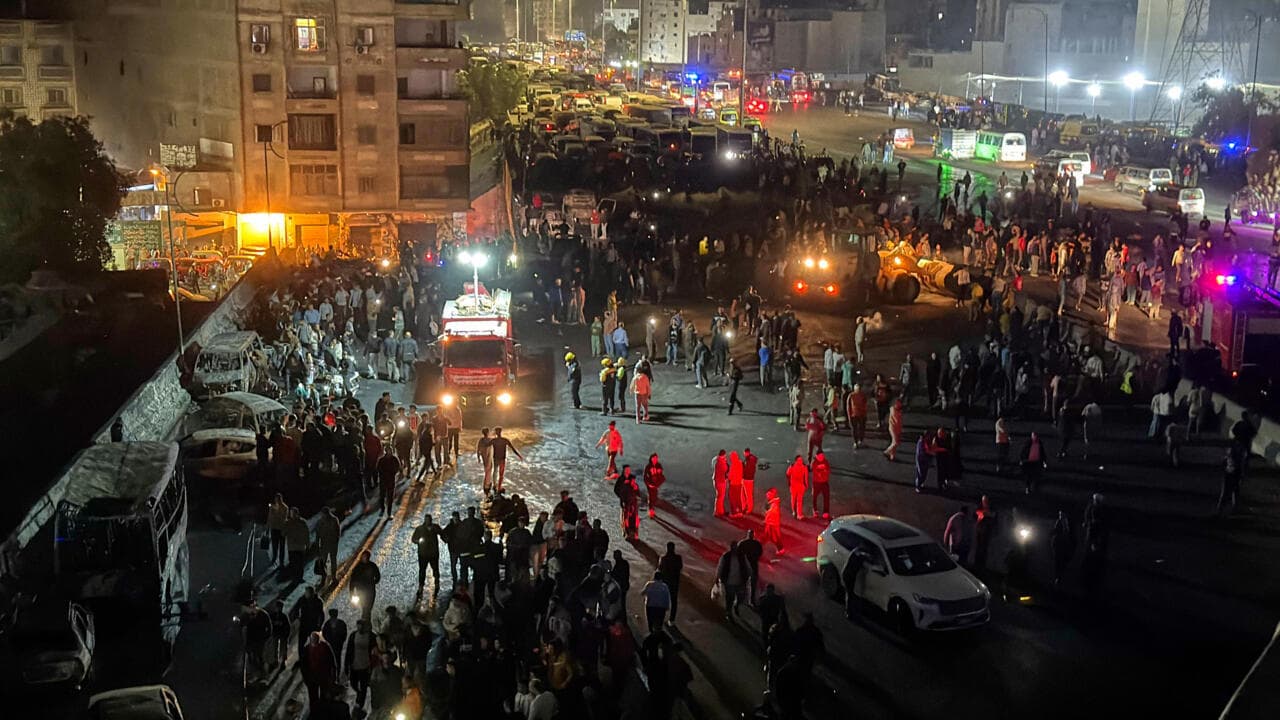
According to reports from France 24, at least 31 people were killed and 15 others injured on Wednesday when a fuel truck overturned and erupted into flames on a crowded highway in Cairo. The disaster unfolded on the capital city's heavily trafficked Ring Road, where the ruptured tanker unleashed a massive fireball that quickly consumed nearby vehicles.
Emergency responders rushed dozens of ambulances to the site as plumes of thick black smoke billowed over the densely populated Al-Waraq neighborhood.
The Ground Zero Reality on Cairo's Ring Road
Cairo's orbital highway system carries hundreds of thousands of heavy commercial vehicles daily, creating a continuous logistical hazard near dense residential districts. Urban planners have long warned that mixed-use transit arteries lack adequate separation for hazardous cargo moving through metropolitan boundaries. Wednesday's explosion demonstrated how quickly a routine vehicular failure turns into a municipal catastrophe.
Traffic came to a complete standstill moments before the rupture, trapping dozens of commuters inside private cars and minibuses. The resulting thermal wave left drivers little room to escape as fuel spilled across multiple lanes of asphalt.
Chaos and Triage in Al-Waraq
Witnesses on the ground described immediate panic as the tanker split open and ignited during midday transit. Motorists scrambled away from the roaring heat while surrounding urban buildings narrowly avoided direct structural ignition. State media confirmed that 39 ambulances deployed rapidly to triage victims trapped in the gridlock.
Fifteen survivors were rushed to nearby medical facilities, with four admitted in critical condition. Authorities faced a grim recovery process as forensic teams initiated DNA testing to identify victims whose bodies suffered severe thermal burns.
The scene was terrifying.
— Abdel Rahman Khalil, Eyewitness
Emergency Response and Hospital Mobilization
Egypt's health ministry immediately elevated emergency alert levels across capital hospitals to handle the influx of trauma patients. Health Minister Khaled Abdel Ghaffar traveled directly to the disaster zone and receiving hospitals to oversee emergency coordination. State-linked broadcaster Al-Qahera News later confirmed that clearing operations progressed swiftly enough to reopen the vital transport artery.
State-linked al-Qahera News reported that the Ring Road has been reopened, and the remnants of the accident have been cleared.
Heavy machinery removed the charred skeleton of the fuel tanker while municipal crews scrubbed the asphalt to restore partial traffic flow through the corridor.
Institutional Investigations and Infrastructure Pressures
Prime Minister Mostafa Madbouly directed an immediate cabinet-level inquiry into the precise mechanical and logistical triggers of the crash. Egypt's public prosecutor launched a parallel criminal investigation to establish liability and examine vehicle safety logs. Government officials acknowledged that the tragedy exposes deep vulnerabilities in national hazardous material transit protocols.
A spokesperson for the Egyptian Cabinet noted that the administration awaited comprehensive findings before establishing future measures regarding the transport of petroleum products and ensuring safety and security during such transport operations
. The policy review arrives amid mounting public scrutiny over commercial transit oversight across major metropolitan corridors.
Regulatory Gaps in Fuel Distribution Networks
Commercial transport operators frequently bypass designated hazardous cargo routes to cut fuel costs and shave hours off delivery times. Independent mechanics point out that many aging tanker trucks lack functioning anti-lock braking systems and rely on worn tires. Enforcement agencies struggle to monitor thousands of independent freight operators scattered across dozens of provincial depots.
Inspectors face immense pressure to keep supply chains moving without causing severe retail fuel shortages in expanding urban zones. Consequently, overloaded tankers routinely navigate congested bypasses during peak traffic hours despite existing daytime driving bans.
Broader Safety Deficits Across the Africa Transport Sector
The disaster highlights enduring structural challenges facing regional transit systems, including uneven regulatory enforcement and aging vehicle fleets. Informal residential growth and tight urban warrens frequently complicate emergency vehicle access during major highway crises. Traffic safety remains a persistent national concern across the region, where authorities recorded nearly 6,000 road fatalities in the previous year alone.
Wednesday's highway explosion follows a separate mass casualty incident in August, when 18 agricultural workers died in a northern provincial collision. Transport analysts point to chronic issues such as driver fatigue, lax maintenance standards, and widespread non-compliance with speed limits as core systemic drivers of recurring highway loss.
The Morning Brief
One email a day with the stories that matter. Free, forever.
No spam. Unsubscribe anytime.
Comments (0)
Be the first to share your thoughts.