
Kunar School Blast Kills 7 Students and Injures Up to 99 in Afghanistan
A tragic explosion near Shagai Middle School in Kunar province kills seven students and injures up to 99 following the detonation of an industrial mining depot.
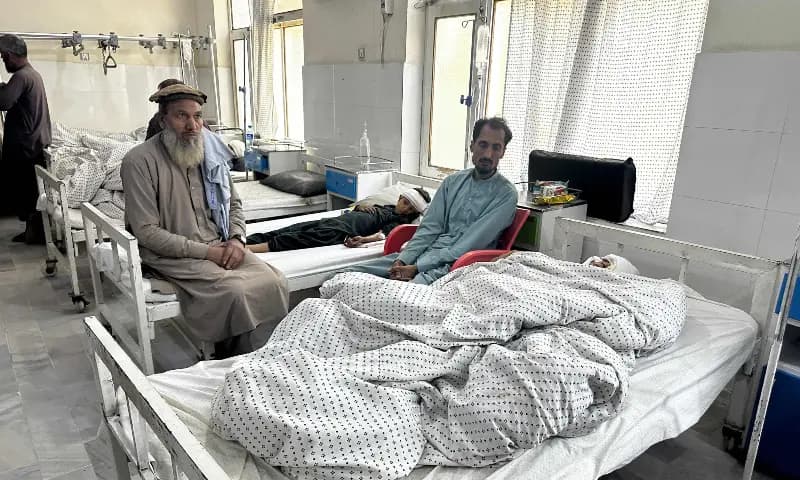
According to Dawn, a devastating explosion near a school in Afghanistan's northeastern Kunar province killed seven students and injured up to 99 others on Saturday. The incident has left local communities reeling and prompted urgent investigations by regional authorities into industrial safety standards.
The tragedy highlights the hidden hazards posed by unregulated industrial storage in civilian areas across World News beats. As emergency responders sift through the rubble, understanding how everyday classrooms came into contact with industrial-grade blasting materials requires a careful look at the sequence of events.
The Andarsir Blast Sequence and Initial Emergency Response
The explosion tore through the Andarsir area of Asadabad district on Saturday afternoon. Initial statements from officials revealed that the detonation destroyed a residential structure located dangerously close to Shagai Middle School.
Locating the Blast Site Near Shagai Middle School
Asadabad district sits within Kunar province, a mountainous region bordering Pakistan that hosts numerous mineral extraction sites. Local classrooms frequently operate adjacent to heavy industrial staging grounds due to a lack of formal zoning enforcement.
Casualty Figures at the Provincial Hospital
Medical personnel at the provincial hospital received seven bodies immediately following the blast. Another 97 wounded individuals arrived shortly after, with officials warning that the final toll might climb as rescue teams clear remote sectors.
Emergency Teams' Tactics on the Ground
First-responders arrived within ten minutes, using hand-held radios to coordinate search patterns through collapsed walls. They deployed stretchers made from local fabric, a pragmatic choice when standard equipment proved scarce.
Medical volunteers set up a triage tent on the school’s playground, sorting victims by severity while a generator sputtered power for a portable ventilator. The rapid shift from classroom to field hospital illustrated how fragile infrastructure adapts under pressure.
By nightfall, a convoy of trucks from neighboring districts delivered additional blood bags, a scarce resource in the region. The influx of supplies prevented the provincial hospital from reaching a critical shortage.
Unpacking the Industrial Mining Link in Kunar Province
Official investigations quickly shifted focus toward the commercial extraction sector operating throughout northeastern Afghanistan. Mining companies routinely stockpile volatile compounds locally to clear rock and tunnel through mountainous terrain.
The Storage Depot Inside a Residential Area
Abdul Mateen Qani, a spokesperson for the Afghan Taliban Interior Ministry, confirmed in a statement that preliminary findings point to a private explosives depot. The facility was storing commercial mining materials just meters away from youth educational facilities.
Preparation Errors and Unintentional Detonation
Sami-ul-Haq Haq Bayan, head of Kunar's department of information and culture, explained that the blast occurred unintentionally as workers prepared explosives for upcoming rock-blasting tasks. The failure to maintain safe buffer zones between industrial prep work and populated student zones proved fatal.
Supply Chain of Explosives in Remote Afghan Mines
Explosives arrive from ports in Karachi, then travel over unpaved mountain roads before reaching small depots like the one near Shagai Middle School. Drivers often bypass official checkpoints, a shortcut that cuts hours but also sidesteps safety inspections.
Local traders repack the bulk material into smaller containers, labeling them merely as “construction supplies.” This practice blurs the line between civilian and industrial use, making it harder for authorities to track hazardous stock.
Because the region lacks cold-storage facilities, workers keep the compounds in makeshift warehouses built from mud bricks. Those structures offer little protection against heat spikes that can trigger spontaneous ignition.
Image: dawn.comBroader Safety Deficits Across Afghan Educational Centers
Saturday's disaster in Kunar is part of a troubling pattern of institutional safety failures affecting youth across the country. Educational facilities face recurring threats from both conflict-related violence and lax industrial oversight.
Echoes of Previous Urban Educational Tragedies
In August, a separate explosion at an educational center in Kabul injured at least 42 children, according to the United Nations Assistance Mission in Afghanistan. A single Kabul hospital admitting 35 of those victims reported that every patient was between the ages of 10 and 14.
Regulatory Enforcement Challenges Ahead
Regional authorities in Kunar stated that comprehensive inquiries remain ongoing to establish full accountability for the stored materials. Communities now face the urgent task of relocating hazardous industrial depots away from schools to prevent future catastrophes.
Community Mobilization After the Blast
Parents gathered at the school’s entrance, demanding that officials seal the nearby depot within 48 hours. Local elders organized a petition that collected 1,200 signatures, a tangible sign of collective frustration.
Non-governmental groups dispatched volunteers to map all known explosive caches within a five-kilometer radius of schools. Their findings, still unpublished, suggest that more than a dozen similar sites exist across Kunar.
Teachers held impromptu lessons in tents while the main building remained unsafe, illustrating how education adapts amid crisis. The makeshift classrooms relied on daylight, a reminder of the region’s limited electricity supply.
International Aid and Policy Reactions
Several United Nations agencies sent emergency kits, including bandages, antibiotics, and portable lighting, to assist the provincial health network. The UN’s rapid response team emphasized that “immediate medical relief saves lives while investigations continue.”
Donor Nations' Conditional Funding
The United States pledged $2 million for “explosive safety training” in Afghanistan’s mining districts, a sum earmarked for workshops that teach proper storage distances. The funding arrives with a requirement that local ministries submit quarterly compliance reports.
European partners echoed the call for stricter zoning, offering technical assistance to draft provincial ordinances. Their experts plan to hold a two-day seminar in Asadabad next month, focusing on risk-assessment tools that can be applied without high-tech equipment.
Policy Shifts Within the Taliban-Led Government
Interior Ministry officials announced a new directive that mandates a 200-meter clearance zone between schools and any facility handling explosives. The rule, however, lacks a clear enforcement timeline, leaving critics skeptical.
Ministers also ordered a temporary freeze on new mining permits until existing depots undergo safety inspections. This pause could stall revenue streams that fund local infrastructure projects, a trade-off that policymakers must balance.
Human rights groups warned that without transparent oversight, the directive may become a paper exercise. They urged the creation of an independent watchdog that includes community representatives.
What Residents Must Decide
Families now weigh the choice between returning to a damaged school or enrolling children in distant alternatives that require long, hazardous commutes. The decision hinges on how quickly authorities can clear the blast zone.
Local business owners, whose livelihoods depend on the mining sector, face pressure to relocate stockpiles despite limited alternative sites. Their compliance will determine whether future explosions become a relic of the past or a recurring headline.
As the region grapples with grief and reconstruction, the Andarsir blast stands as a stark reminder that safety gaps can turn ordinary classrooms into disaster zones. The next weeks will reveal whether new policies translate into real-world protection for Afghanistan’s youngest citizens.
The Morning Brief
One email a day with the stories that matter. Free, forever.
No spam. Unsubscribe anytime.
Comments (0)
Be the first to share your thoughts.