
US Approves SpaceX Plan to Deploy One Million Orbiting AI Data Satellites
Regulators have cleared SpaceX to deploy a million orbital data centers powered by sunlight, bypassing terrestrial energy bottlenecks for AI computing.
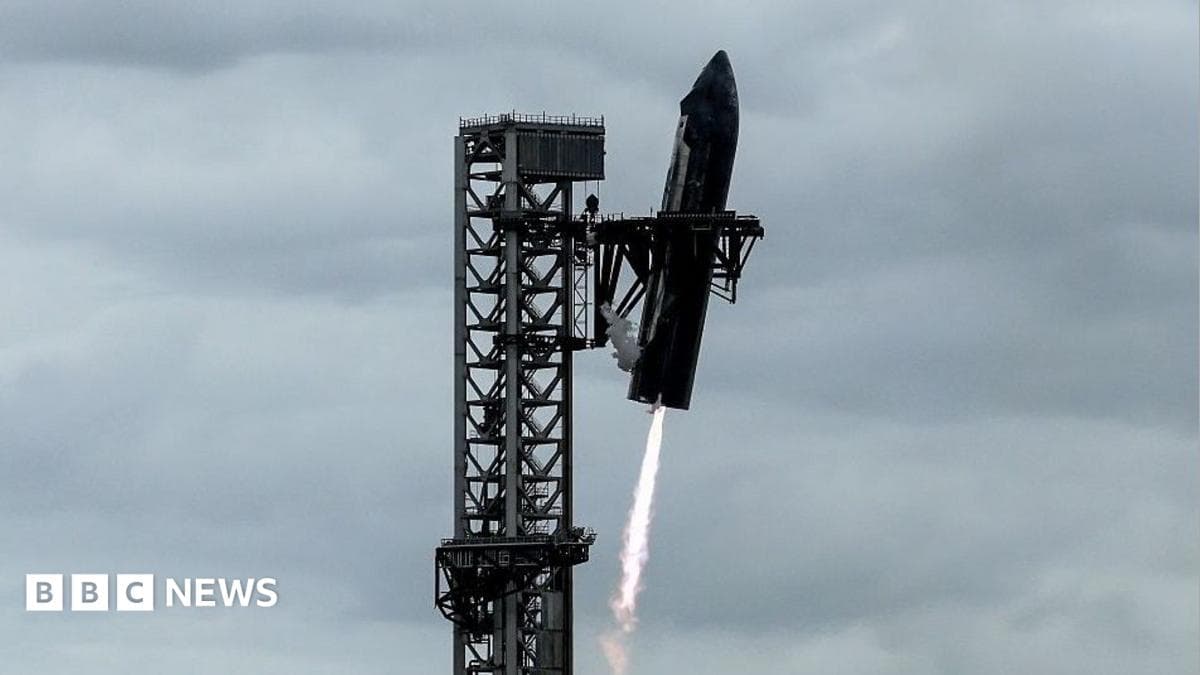
According to BBC News, federal regulators have cleared SpaceX to launch a million satellites into Earth orbit to construct orbital data centres, marking a massive regulatory greenlight for Elon Musk's newly unveiled Starmind initiative. The plan aims to shift heavy artificial intelligence computing loads into space, bypassing the severe terrestrial power bottlenecks that currently constrain the technology sector. That math breaks fast for land-based facility planners. While local communities across the US push back against sprawling, water-thirsty server farms on the ground, space offers a frictionless alternative powered entirely by unfiltered sunlight.
The Federal Communications Commission announced its approval on Wednesday, positioning the project to "support America's booming super intelligence economy" as processing demands outpace grid capacity. Starmind relies on a constellation operating in low-Earth orbit at altitudes between 500km and 2,000km, routing computations through SpaceX's existing Starlink infrastructure to relay results back to the surface. It's an audacious architecture that treats the vacuum of space as an infinite cooling radiator. Competitors like Google and Blue Origin are exploring similar concepts, but none hold an operational licence of this sheer magnitude.
The Terrestrial Power Crunch Versus Orbital Ambition
The push toward the stars is driven by mounting grid failures on Earth. Traditional data centers require massive quantities of electricity to run processors and immense volumes of water for cooling towers. Those demands turned server construction into a flashpoint during recent midterm elections, where voters rejected new facilities near residential zones. Facilities face prolonged interconnection queues from regional utility operators who cannot guarantee steady supply. That friction explains why SpaceX pitches its orbital concept as a greener, unconstrained alternative to ground-bound server farms. No local zoning boards exist in the thermosphere.
Regulatory authorities have embraced this extraterrestrial pivot with explicit enthusiasm. FCC Chairman Brendan Carr emphasized the strategic upside of the agency's decision in an official release. Starmind "opens a bold new frontier for the computing infrastructure needed to power America's leadership and growth," Carr said in a statement.
"This is the kind of American ingenuity that can unite our strengths in space and advanced technology, reinforce our economic leadership, and expand prosperity here at home."
— Brendan Carr, FCC Chairman
Elon Musk responded to the regulatory clearance on X with characteristic brevity. "Much appreciated. This will be a great asset to America and the world," Musk wrote. The ambition scales far beyond corporate profit margins. The FCC statement explicitly noted that the solar-powered network "promises to bring the human race closer to a Kardashev II civilisation—one that can harness the full power of the sun," invoking a mid-century theoretical framework for measuring a society's technological advancement through energy mastery.
Milestone Deadlines and the Mechanics of Orbit
The path from regulatory approval to a million operational satellites remains long and legally bound by strict deployment phases. Under the terms of the FCC licence, SpaceX must launch its first operational deployment no later than November 2033. The company is required to hit a 10% deployment threshold by November 2035, scaling up to 50% by November 2038. Company leadership has already signaled plans to test the waters by launching the inaugural Starmind satellite next year. Industry analysts remain skeptical whether a full million units are genuinely required or if the filing represents an inflated ceiling designed to secure orbital slots.
The logistical architecture leverages the mechanics built out for the Sci-Tech sector over the past decade. Starmind satellites will communicate directly with Starlink craft, using laser links to shuttle petabytes of data across the constellation before downlinking to ground stations. Yet this density brings severe operational hazards. Independent physicists and aerospace researchers have repeatedly warned that packing low-Earth orbit with hundreds of thousands of new objects exponentially raises the risk of catastrophic collisions. Orbital debris already threatens crewed space stations and active payloads. Starlink has previously faced intense criticism from rival operators for crowding out competitors and generating space congestion, accusations that Musk has consistently rejected.
The Hard Physics and Environmental Trade-Offs
Launching hardware into orbit remains exceptionally expensive, despite reusable rocket boosters. Protecting sensitive silicon processors from cosmic radiation, managing thermal dissipation in a vacuum, and powering massive server racks without terrestrial grid support requires engineering breakthroughs that are still in their infancy. A single micro-meteoroid impact can instantly disable a multi-million-dollar computing node. If debris management fails, damaged hardware risks re-entering the atmosphere unpredictably, scattering metallic debris back across the globe.
The tension between expanding AI compute and protecting the upper atmosphere's carrying capacity defines the next decade of aerospace policy. Communities on Earth no longer want server farms in their backyards, but populating the night sky with a million industrial nodes carries its own planetary tax. Starmind tests whether humanity can build its digital future above the clouds without permanently locking itself inside a cage of its own spent metal.
The Morning Brief
One email a day with the stories that matter. Free, forever.
No spam. Unsubscribe anytime.
Comments (0)
Be the first to share your thoughts.