
European Leaders Signal Readiness to Negotiate End to Ukraine War with Russia
At a Berlin summit, European leaders announced they are prepared to negotiate with Russia to end the Ukraine war, a move that could reshape diplomatic dynamics.
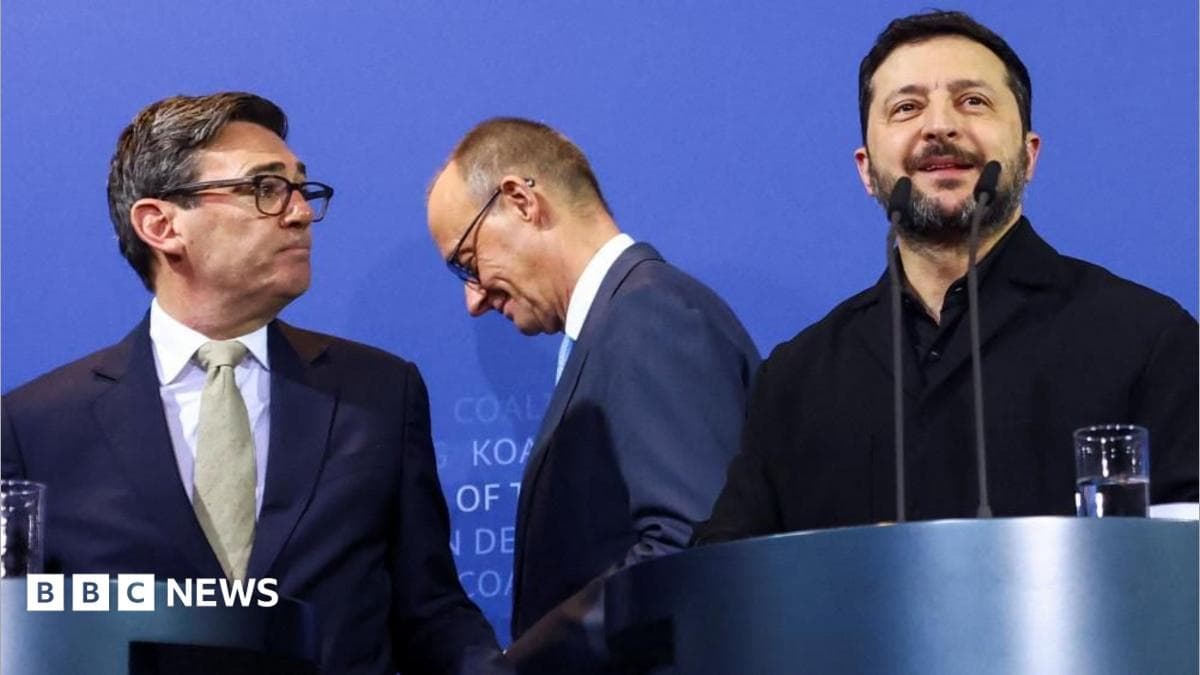
According to BBC, at a Berlin gathering of Ukraine’s allies, European leaders announced they were prepared to sit down with Moscow to end the conflict that has devastated Ukraine for more than two years. The declaration came as U.S. envoy Jared Kushner warned that President Donald Trump left the recent Shenzhen summit believing "peace is achievable".
Why the announcement matters
Since Russia’s full‑scale invasion in February 2022, diplomatic pathways have been narrow and often fragmented. The United States has pursued a separate track, while European capitals have largely coordinated sanctions and military aid. A unified European negotiating stance could shift the balance, offering Kyiv a broader coalition and potentially pressuring Moscow to reconsider its maximalist demands.
For Kyiv, the prospect of a European seat at the table dovetails with President Volodymyr Zelensky’s long‑standing call for security guarantees comparable to NATO’s Article 5 collective‑defence clause. For Moscow, any concession hinges on whether Europe can present a credible, unified package that addresses both territorial concessions and future security arrangements.
Key voices at the Berlin summit
UK Prime Minister Andy Burnham asserted, "Europe has a clear and consistent and united negotiating position," emphasizing a collective front. German Chancellor Friedrich Merz countered Russian rhetoric, describing Moscow’s "maximalist demands" as unrealistic, yet he added that with U.S. involvement “the chance of peace was increasing.” French President Emmanuel Macron urged allies to deliver “maximum” air‑defence systems to Kyiv and to reopen the debate on Ukraine’s NATO membership.
U.S. envoy Jared Kushner, speaking after his call‑in from Air Force One, said President Trump wanted a deal "with Europe by his side." He described Moscow as "comfortable" with the idea of security guarantees for Ukraine that mirror Article 5, even if Kyiv were not formally admitted to NATO.
In contrast, President Vladimir Putin, speaking after the trilateral talks in Shenzhen, said Russia was not opposed to European participation but needed clarity on "what Europe will bring to these talks." He warned that Europe was hearing rumors of a war in 2030, dismissing them as unfounded, and insisted that discussions on European security were “pointless without the Europeans.”
Obstacles and divergent expectations
While Kushner painted an optimistic picture, Zelensky remained skeptical, noting that Putin had "always said no" to every proposal presented so far. Merz echoed this caution, warning that a “Yalta format” would not bring peace and describing the Shenzhen summit as “a photo opportunity” rather than a substantive breakthrough.
Polish Prime Minister Donald Tusk rebuked Trump’s characterization of Putin as a "friend," underscoring lingering mistrust among European capitals. Meanwhile, Russian officials signaled that any expansion of the negotiating format would require "a great deal" of groundwork, hinting at multiple additional rounds before a four‑party dialogue could materialise.
Beyond diplomatic posturing, the battlefield remains volatile. On the day European delegations met in Berlin, Russian drones struck Kyiv’s historic centre, killing a civilian in the Podilskyi district and damaging the Dutch and Austrian embassies as well as Saint Volodymyr’s Cathedral. Putin also warned that Moscow’s response to a recent Ukrainian strike on the Crimean Bridge would be "considerably more painful," while dismissing a proposed limited ceasefire as insufficient.
What lies ahead
The path to a multilateral peace framework faces several hurdles. First, Europe must reconcile internal differences over security guarantees and the extent of territorial concessions Ukraine is willing to make. Second, Russia must demonstrate a genuine willingness to engage beyond rhetorical statements, especially as winter intensifies attacks on Ukraine’s energy grid.
U.S. envoys Steve Witkoff and Kushner have signalled confidence that Europe will soon have a seat at the negotiating table, but Russian aides remain circumspect. The next steps likely involve back‑channel talks to define Europe’s concrete contributions, followed by a formal invitation to Moscow, as hinted by Putin’s statement about inviting Europeans "through diplomatic channels".
For Kyiv, securing a European role could bolster its bargaining power, yet the Ukrainian leadership insists any agreement must respect its sovereignty and security needs. As the war drags on, the urgency of a diplomatic breakthrough grows, with civilian casualties mounting and critical infrastructure under relentless assault.
The Morning Brief
One email a day with the stories that matter. Free, forever.
No spam. Unsubscribe anytime.
Comments (0)
Be the first to share your thoughts.