
UN Human Rights Expert Francesca Albanese Stranded at Costa Rica Airport Over Terror Alert
UN human rights rapporteur Francesca Albanese is stranded at a Costa Rican airport after officials blocked her entry over alleged security alerts.
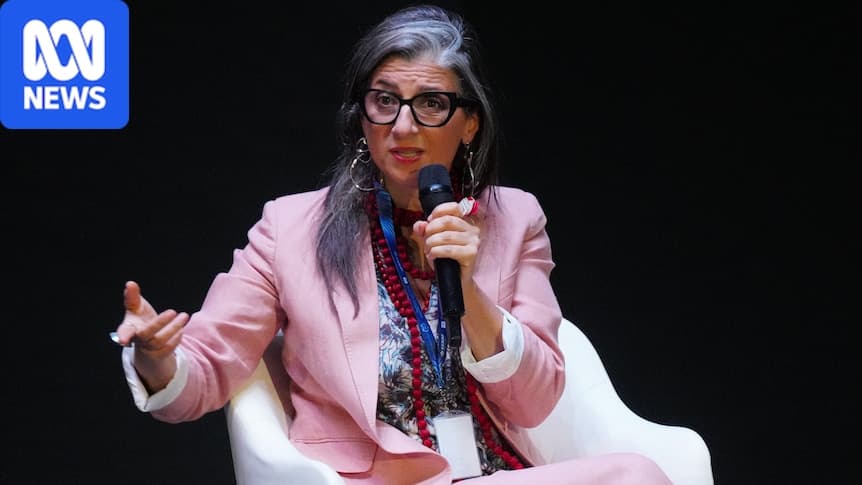
According to the Australian Broadcasting Corporation, United Nations special rapporteur Francesca Albanese spent her first night stranded in a Costa Rican airport terminal after immigration officials blocked her entry. Authorities cited an international security alert linking her to alleged terrorist ties.
Ms Albanese arrived at the invitation of the University of Costa Rica to receive an honorary doctorate. Instead of attending the ceremony in person, she joined via video call from a restricted room while her luggage sat beside a row of empty airport chairs.
Her detention highlights mounting international tensions over human rights scrutiny in the Palestinian territories. Readers following international developments can explore broader shifts across World News and regional legal conflicts through Security coverage.
The Operational Mechanism of Airport Security Flags and Administrative Denials
Costa Rican immigration officials invoked national security protocols to halt Ms Albanese at the border. The agency claimed her official profile triggered an automatic security alert, designating her presence as a direct risk to public safety.
Critics, including the Costa Rican ombudsman's office, quickly challenged that justification. Investigators pointed out that border agents failed to conduct an individualized assessment of her official UN status or diplomatic protections before issuing the entry ban.
The rapid escalation caught university organizers off guard. One of her assistants cleared customs successfully and accepted the academic honor on her behalf, while the investigator remained isolated behind immigration desks.
Automated Alerts vs Human Review
Costa Rica relies on a biometric database that cross-references travelers against a list maintained by Interpol and partner states. When a name matches a flagged entry, the system automatically generates a “high-risk” tag that requires no immediate human verification.
Human reviewers can override the tag, but the protocol mandates a 48-hour window that expires if officials do not act. In Albanese’s case, the window closed before any senior diplomat intervened, leaving the flag to dictate her fate.
International Sanctions and Diplomatic Friction
The border blockade traces back to deep geopolitical friction established months prior. In July 2025, the United States imposed formal sanctions on Ms Albanese following her vocal criticism of US and Israeli military actions in Gaza.
United States Secretary of State Marco Rubio criticized her mandate at the time, characterizing her ongoing investigations as a deliberate effort to wage political and economic warfare against Washington and its allies.
Costa Rica's current administration has actively aligned its foreign policy with Washington's diplomatic framework. Recent domestic policy choices in San Jose include accepting third-country deportees and pursuing aggressive penal reforms mirroring regional security crackdowns.
Costa Rica's Alignment with US Policy
Since the 2023 bilateral security accord, Costa Rica has adopted a “risk-based” screening model that mirrors U.S. entry-restriction lists. The model grants the Ministry of Foreign Affairs the power to request additional background checks for any UN official named in a U.S. sanction.
Local NGOs argue the alignment erodes the country’s historic neutral stance. They point to a 2024 parliamentary vote that expanded executive discretion over diplomatic visas, a move critics say was designed to please Washington’s lobbying bloc.
Image: abc.net.auJudicial Intervention and the Battle Over the Great Writ
Following the border refusal, local legal advocates filed an emergency habeas corpus petition with the Supreme Court's Constitutional Chamber. The court intervened immediately, issuing an interim order that halted her deportation and gave immigration officials 24 hours to justify the detention.
A habeas corpus petition grants detained individuals the legal right to challenge executive overreach before an independent judiciary. In this case, the court's swift injunction prevented authorities from immediately expelling the UN official from the country.
The judicial halt drew swift backlash from executive leadership. Former president Rodrigo Chaves, speaking on behalf of the government, took to social media to condemn the court's intervention in sharp terms.
Yet another usurpation by an increasingly arbitrary judiciary, one that usurps the powers of the other two branches of government and now protects foreigners flagged by international alerts for ties to TERRORIST ACTS!
— Rodrigo Chaves, Minister of the Presidency
The clash exposed deep institutional fractures between Costa Rica's executive branch and its judicial arbiters. UN High Commissioner for Human Rights Volker Türk echoed those concerns, stating he was deeply troubled by the handling of a credentialed UN investigator.
Scope of the Interim Order
The Supreme Court’s provisional decree does not grant full immunity; it merely stalls any removal action until a full hearing can assess the legitimacy of the security alert. Officials must now produce the original intelligence report that triggered the flag.
Legal scholars note that the order forces the immigration agency to disclose classified data to a civilian court, a rare reversal of the usual “need-to-know” shield. The move could set a precedent for future challenges to opaque security databases.
Broader Repercussions for International Human Rights Envoys
Ms Albanese used her virtual acceptance speech to push back against the allegations leveled by immigration officials. She maintained that her detention stemmed directly from her official UN reporting and her scrutiny of trade and diplomatic pacts.
I am deeply outraged that the Costa Rican government has spread false information linking me to terrorism.
— Francesca Albanese, UN Special Rapporteur
She added that defending fundamental rights carries no terrorist intent and promised that the government would face accountability under the rule of law. Her remarks focused heavily on Costa Rica's recent trade agreements with Israel and what she termed active complicity in regional oppression.
Future of UN Envoy Access
Human-rights missions worldwide watch the Costa Rican case closely, fearing a ripple effect that could see more states invoke security alerts to block UN fact-finders. A 2024 UN briefing warned that such tactics undermine the agency’s ability to monitor violations in conflict zones.
If the Supreme Court ultimately upholds the detention, other governments may cite the ruling as legal cover for similar exclusions. Conversely, a reversal could reinforce the principle that diplomatic immunities trump unilateral security flags.
As legal teams await the final constitutional ruling, Ms Albanese remains in administrative limbo at the terminal. The outcome of the Supreme Court review will set a critical domestic precedent for how international mandates and diplomatic immunities interact with national border sovereignty.
Potential Diplomatic Fallout
Both the United Nations and the United States have signaled they will monitor the case for signs of escalation. Washington’s State Department issued a brief statement reminding allies that “unwarranted restrictions on UN officials jeopardize collective security efforts.”
Meanwhile, the European Union has called for a transparent investigation, urging Costa Rica to respect its obligations under the 1948 Convention on Diplomatic Relations. The next week could see a flurry of diplomatic notes, each probing whether the security alert was a legitimate safeguard or a political weapon.
The Morning Brief
One email a day with the stories that matter. Free, forever.
No spam. Unsubscribe anytime.
Comments (0)
Be the first to share your thoughts.