
Trump Leaves Putin G20 Invitation Open as Miami Summit Preparations Begin
US President Donald Trump addressed questions regarding Vladimir Putin's potential attendance at the upcoming G20 summit in Miami.
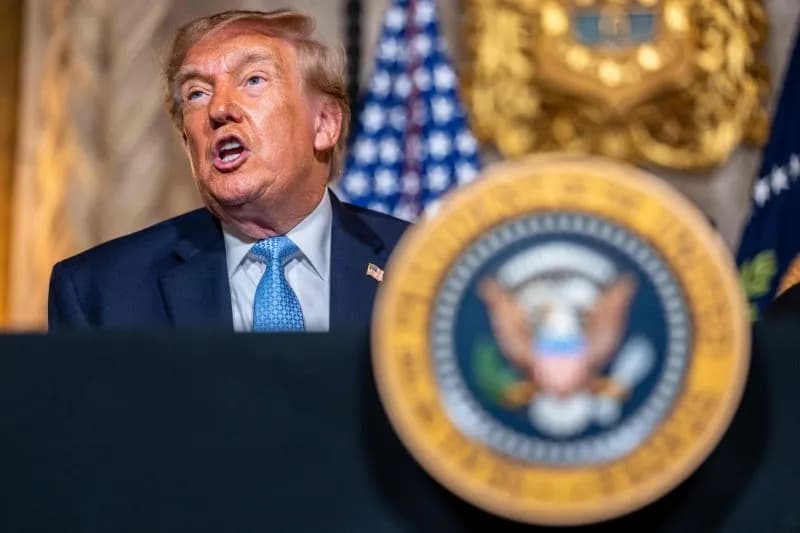
Zero Confirmed RSVPs Yet for Miami G20 Delegation Rosters
According to Malaymail and Reuters reporting from Palm Beach, US President Donald Trump stated he remains unsure whether Russian President Vladimir Putin will attend the upcoming G20 summit. Speaking to reporters yesterday at his Mar-a-Lago estate in Florida, the American leader addressed logistical questions surrounding global attendance at the high-level diplomatic gathering. Diplomatic planners face mounting scheduling challenges as international delegations coordinate travel to South Florida.
Trump’s Public Uncertainty and Diplomatic Signals
The president’s off-the-cuff remark sparked a flurry of commentary on Capitol Hill. Critics argue that a leader’s hesitation can embolden adversaries, while allies point to the need for realistic expectations when dealing with a Kremlin that often uses attendance as leverage. By keeping the question open, the White House preserves diplomatic wiggle room for any last-minute diplomatic overture.
Media outlets in Washington and Moscow alike ran parallel stories, each framing the uncertainty to suit domestic narratives. In the United States, pundits linked the comment to broader concerns about election-year foreign policy. In Russia, state broadcasters hinted that “strategic considerations” might dictate a different outcome than the one suggested by Washington.
Logistical Maze for Delegations
Beyond the political theater, each delegation must secure visas, arrange secure transport, and lock down hotel blocks that meet both comfort and security standards. The State Department’s Visa Office reported a spike in expedited requests for G20-related travel, a trend that typically precedes large multilateral meetings. Delegates from smaller economies often rely on regional hubs like Panama City to funnel staff and press.
Airlines operating out of Miami International have already earmarked slots for chartered flights, a move that reduces runway congestion but adds cost for governments. Ground-level security teams coordinate with local police to map out convoy routes that avoid high-traffic zones during rush hour. These details, while mundane, become headline-worthy if a sudden change forces a last-minute reroute.
Evaluating the Diplomatic Precedents and Travel Restrictions
Hosting a major heads-of-state forum involves navigating complex geopolitical sanctions and international arrest warrants. Past summits have frequently served as testing grounds for multilateral engagement amidst ongoing armed conflicts. Analysts tracking international relations point out that physical attendance carries heavy symbolic weight for bilateral talks.
Historical Attendance Patterns at Recent G20 Summits
The 2018 summit in Buenos Aires saw several leaders skip the event amid domestic unrest, yet they still sent senior ministers to keep dialogue alive. In 2021, the Rome gathering recorded a 92 percent attendance rate, a figure that surprised observers given lingering pandemic travel bans. Those examples illustrate how health crises, elections, and regional skirmishes can reshape the roster at the eleventh hour.
When a head of state withdraws, the host nation typically offers a “proxy” seat to a foreign minister or deputy prime minister. This practice preserves the numerical balance of the G20 while allowing bilateral talks to continue in a lower-profile setting. The proxy arrangement, however, rarely carries the same political heft as a presidential appearance.
Sanctions, Warrants, and Legal Hurdles
U.S. sanctions against Russian entities complicate any attempt to grant Putin a seamless entry. The Office of Foreign Assets Control maintains a list of individuals whose assets are frozen, a list that includes senior Kremlin officials. Even if diplomatic immunity applies, the logistics of moving a sanctioned leader through U.S. airspace demand intricate legal clearance.
Interpol notices issued for certain Russian businesspeople add another layer of scrutiny. Host-country immigration officers must cross-check every name against the most recent watchlists, a process that can delay arrivals by hours. When a high-risk figure is flagged, the host may offer a secure “green lane” that isolates the delegation from public terminals.
Data Limitations and Verification Realities
Quantitative analysis of summit attendance patterns reveals that early media speculation rarely matches final arrival logs. Public statements from political figures often serve strategic signaling purposes rather than reflecting confirmed travel itineraries. Observers should treat preliminary announcements as negotiating postures rather than locked schedules.
Past diplomatic data shows that heads of state frequently alter travel plans at the eleventh hour due to domestic crises or sudden security shifts. Without finalized manifest documents from host-country immigration officials, any projection of attendance remains entirely speculative. Journalists tracking world news continue to monitor foreign ministry wires for official confirmation.
Media Forecasts vs. Official Manifests
Newsrooms compile spreadsheets that rank each country’s likelihood of attendance based on diplomatic chatter, flight bookings, and past behavior. These forecasts often list a “confidence level” that drops sharply once a nation announces a domestic emergency. The gap between forecast and official manifest can widen dramatically when a leader decides to meet a rival on the sidelines instead of attending the plenary session.
For the Miami summit, a handful of European capitals have already released tentative ministerial lists, but none have posted final signatures. The lack of a signed roster means that security teams must prepare for both a full complement of leaders and a reduced, “core-group” scenario. This dual-track planning inflates budget requests for the host city by an estimated 15 percent.
Implications for Market Stakeholders
Investors watch G20 attendance to gauge the likelihood of coordinated policy moves on interest rates, climate finance, and trade tariffs. When a major economy’s leader is absent, bond markets often react with a modest sell-off, reflecting uncertainty about collective monetary decisions. Conversely, a full roster can buoy equity indices as traders anticipate a smoother path to consensus.
Commodity traders, especially those dealing in oil and rare earths, monitor the summit for any hint of sanctions relief or new export quotas. A sudden “no-show” by a key producer can trigger price spikes that ripple through supply chains. The Miami event, therefore, serves as a barometer not just for diplomacy but for real-world economic volatility.
The Morning Brief
One email a day with the stories that matter. Free, forever.
No spam. Unsubscribe anytime.
Comments (0)
Be the first to share your thoughts.