
Trump Directs Urgent Warning to Putin Over European Military Aggression
US President Donald Trump asked Vladimir Putin to halt military aggression in Europe, signaling a sharp shift in tone following talks with NATO chief Mark Rutte.
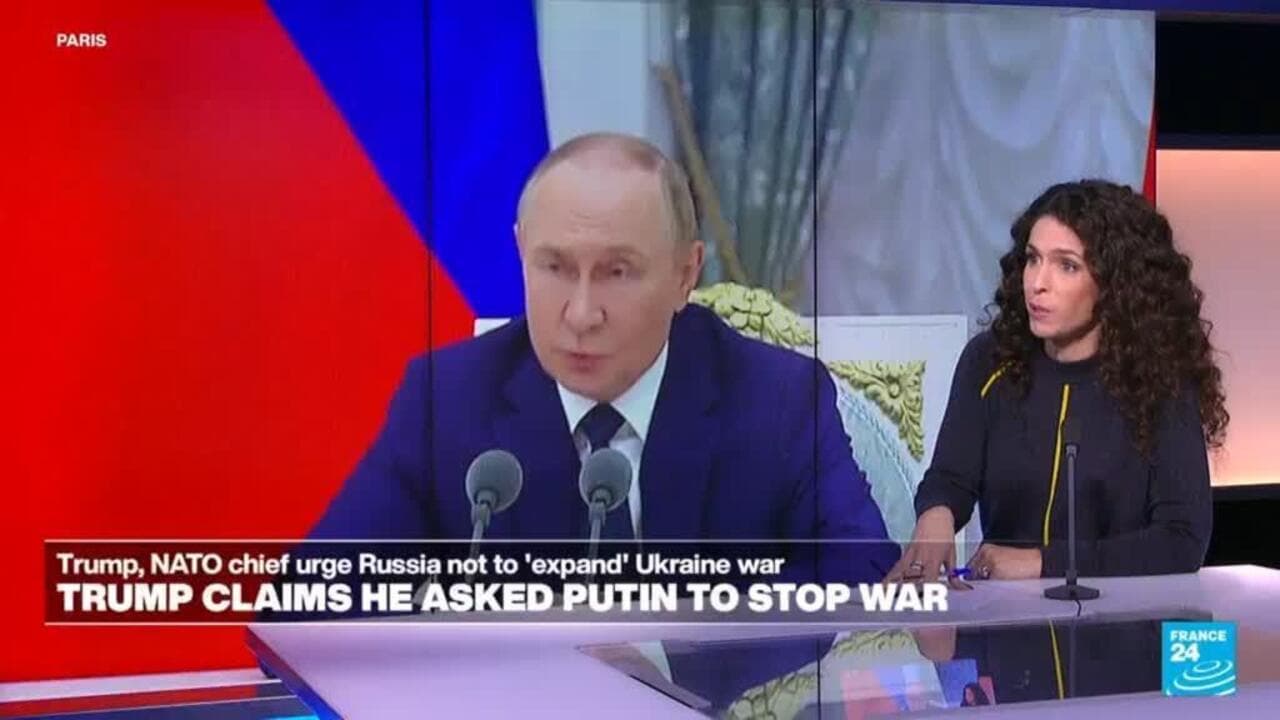
Shifting Rhetoric After High-Level Talks
According to France 24, US President Donald Trump stated on Thursday that he pressed Russian leader Vladimir Putin to de-escalate tensions across the continent. This public pivot arrived just days after Trump had referred to the Russian president as a friend during a high-profile diplomatic summit in China. Observers across World News channels noted the sharp contrast in language as Washington recalibrated its immediate foreign policy stance.
Trump revealed that he delivered the direct appeal during their face-to-face discussions overseas. He expressed optimism that the intervention might clear a path toward settling the prolonged conflict in Ukraine. The remarks surfaced merely twenty-four hours after Trump hosted NATO Secretary General Mark Rutte at a private estate in Florida.
Context of the China Summit
The summit in Beijing gathered leaders from more than a dozen nations, all seeking a coordinated response to the war in Ukraine. While the agenda listed trade, climate and security, the back-room talks focused heavily on Russian actions in the east. Analysts say the venue offered Putin a rare platform to signal openness, which Trump later leveraged in his own outreach.
Mechanics of the Direct Appeal
According to aides, Trump’s conversation with Putin took place in a neutral conference room, away from microphones and press briefings. The president reportedly framed the request as a mutual interest in preventing a broader European conflagration. Sources note that Trump emphasized “stability” and “economic continuity” as incentives for Moscow to pull back.
The Transatlantic Alignment and Diplomatic Leverage
Following their Florida meeting, Trump and Rutte released a joint communique demanding that Moscow halt any further expansion of hostilities. This unified front provides distinct leverage for Western allies, even as diplomatic channels remain fragile. The intersection of US executive strategy and broader Security architectures will heavily influence how European capitals respond to the latest overtures.
Joint Communique: Content and Significance
The document called for an immediate cease-fire in contested zones and urged the United Nations to convene a special session on Ukraine. It also warned that any breach would trigger “additional coordinated measures” from the alliance. By spelling out concrete expectations, the communique moves beyond vague rhetoric and forces Moscow to answer a specific demand.
Reactions from European Capitals
Berlin’s foreign office praised the statement as “a decisive step toward collective security,” while Paris cautioned that the language must translate into action on the ground. Warsaw, still bearing the brunt of artillery fire, urged NATO to back the call with rapid deployment of air-defense assets. These divergent responses highlight the delicate balance each capital must strike between solidarity and national interest.
Evaluating the Winners and Losers in the Current Standoff
European defense planners gain immediate diplomatic validation from the joint US-NATO statement, securing a clearer baseline of Washington's support against regional encroachment. Conversely, Moscow faces tightened political isolation as its strategic calculus meets a synchronized Western pushback. Yet, the durability of this transatlantic alignment remains untested by actual battlefield concessions or tangible peace terms.
Key Inflection Points on the Road to Negotiations
The success of these back-channel talks hinges on upcoming diplomatic benchmarks rather than rhetoric alone. Analysts point to the implementation of any localized ceasefires as the primary metric for whether Trump's appeal yielded actual results. Without verifiable troop withdrawals, both sides risk locking into another prolonged cycle of attrition.
Assessing Strategic Constraints on Both Fronts
The White House must balance its stated desire for a swift diplomatic settlement against NATO's insistence on long-term territorial security for Ukraine. Domestic political pressures in Washington also limit how much leeway the administration can offer without alienating traditional allies. Meanwhile, Moscow operates under the weight of severe economic sanctions and mounting military supply constraints.
Domestic Political Calculus in Washington
Congressional committees have already signaled resistance to any deal that appears to reward Russian aggression. Midterm elections loom, and several swing-state representatives have warned that a perceived “soft-on-Russia” stance could cost them votes. This environment forces the administration to craft a narrative that showcases firmness while still allowing diplomatic flexibility.
Sanctions Pressure on Moscow
Since early 2022, the United States and EU have layered export bans, asset freezes and banking restrictions aimed at choking Russia’s war machine. Recent reports indicate a shortfall in spare parts for armored vehicles, a direct consequence of those measures. The sanctions regime therefore serves both as a punitive tool and as leverage in any forthcoming negotiations.
Future Scenarios for Negotiations
If localized ceasefires materialize, they could pave the way for a broader framework that addresses prisoner exchanges and reconstruction aid. Conversely, a failure to secure even limited withdrawals may embolden hardliners in Moscow, prompting a renewed offensive in eastern Ukraine. Each outcome carries distinct implications for NATO’s future posture and for the stability of the wider European theater.
pull back all military aggression
— Donald Trump, US President
These competing pressures leave very little room for miscalculation as diplomatic teams attempt to turn vague conversation points into binding agreements. Whether these high-stakes discussions can bridge the gap between Moscow's territorial ambitions and Western security guarantees will determine the trajectory of European stability for years to come.
The Morning Brief
One email a day with the stories that matter. Free, forever.
No spam. Unsubscribe anytime.
Comments (0)
Be the first to share your thoughts.