
Senate Leader Opeyemi Bamidele Dismisses Opposition Weakness Ahead of 2027 Election
Senate Leader Opeyemi Bamidele argues that President Bola Tinubu will secure re-election in 2027 because rival parties lack structural capacity.
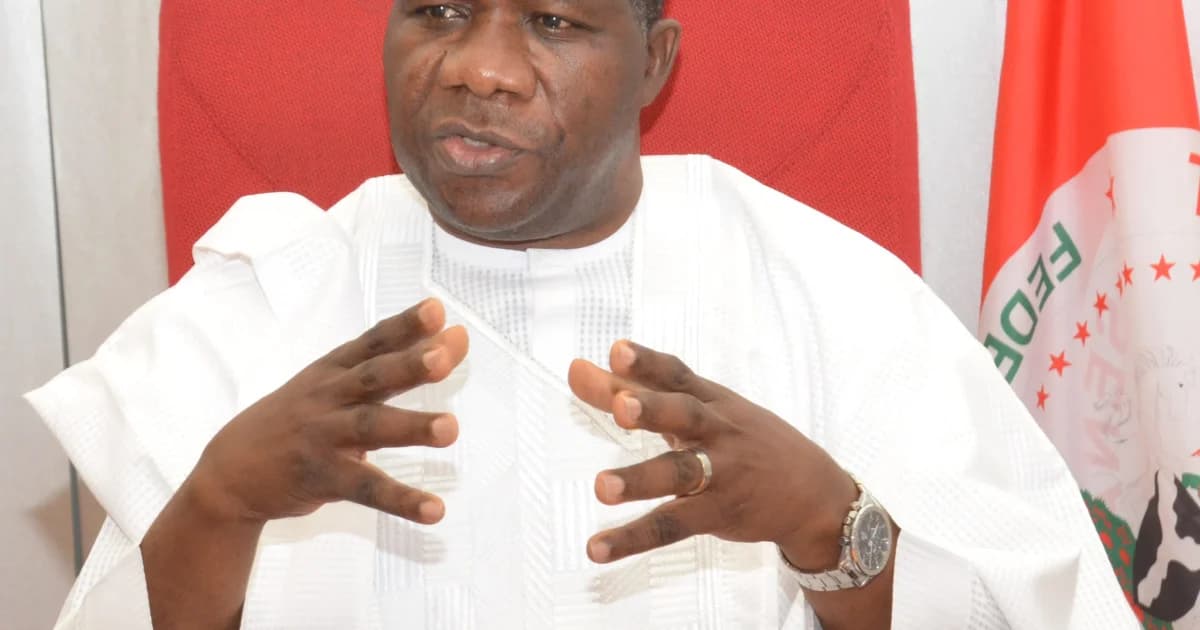
According to Punch Newspapers, Senate Leader Opeyemi Bamidele declared in Abuja on Thursday that President Bola Tinubu will secure re-election in 2027 because rival political factions lack the foundational networks required to mount a credible challenge. This confident projection collides directly with widespread public frustration over punishing economic reforms and soaring living costs across Nigeria.
Critics argue that ruling party officials underestimate the political volatility born from widespread household hardship, yet the Senate leadership insists that structural deficits within opposition camps render them harmless. Bamidele's assessment lays bare the core tactical calculus of the ruling All Progressives Congress as it prepares for the next national contest.
Evaluating the Structural Deficiencies of Opposing Parties
The ruling party's electoral confidence rests less on its own current popularity and more on the systemic disarray plaguing alternative platforms. Bamidele specifically targeted the organisational reach of key opposition groups, noting that major challengers frequently fail to field legislative candidates across a majority of the country's constituencies. Electoral contests in Nigeria are won at the polling unit through physical ground game logistics rather than digital impressions.
When a party lacks local council candidates, its ability to protect ballots and mobilise rural voters collapses completely.
The Illusion of Digital Followership
Online momentum often masks a severe lack of physical infrastructure, a trap that catches many contemporary political commentators off guard. Figures like Peter Obi and Atiku Abubakar maintain vocal digital communities, yet virtual enthusiasm rarely translates into certified votes without precinct-level party agents. Ruling party strategists understand that internet discourse cannot fund ward offices or secure collated results on election night.
Without candidates running for the House of Assembly or Senate in more than half of national constituencies, an opposition presidential flagbearer is essentially running an unanchored campaign.
The Logistical Realities of Grassroots Mobilization
Building a nationwide machine demands years of patronage networks, local council alliances, and constant ward-level engagement that digital campaigns simply cannot replicate. The opposition's fragmentation allows the ruling party to consolidate its grip on state assemblies and local government areas uncontested in many regions. Without these foundational pillars, rival camps remain trapped in perpetual urban echo chambers.
Bamidele's dismissal of these factions highlights a brutal electoral reality: structural absence at the grassroots guarantees defeat long before ballots are cast.
Defending the Fiscal Strategy and the Cost of Transition
Defenders of the administration trace the current economic distress back to unavoidable legacy decisions made during the transition of power in May 2023. Bamidele pointed out that the National Assembly had only budgeted for petroleum subsidy payments up to that exact month, leaving the incoming executive with no legal or financial runway to extend the expense.
Stopping the artificial price support ended a massive drain on public reserves, yet it instantly doubled fuel prices and triggered cascading inflation nationwide. The administration chose immediate fiscal shock over gradual insolvency, betting that painful adjustments would eventually stabilize public finances.
Breaking the Cycle of Central Bank Overdrafts
Another pillar of the administration's defense involves halting the previous practice of financing government deficits through direct Central Bank money printing. Unifying the fractured foreign exchange market also removed multiple exchange rates that previously drained billions in arbitrary arbitrage profits. While these moves satisfied international financial institutions and foreign investors seeking monetary clarity, they simultaneously crushed local purchasing power.
Ordinary citizens absorbed the immediate cost through soaring transportation and food costs while macroeconomic indicators slowly ground toward nominal equilibrium.
Akin to Crossing a Difficult Domestic Frontier
Government insiders frequently characterize the adjustment period as an unavoidable crossing of rough terrain that previous administrations avoided out of political cowardice. Bamidele framed the first three and a half years as the difficult phase of structural surgery, asserting that the remaining tenure will focus on consolidating recovery gains.
However, this narrative offers cold comfort to low-income earners, artisans, and vulnerable populations struggling to afford basic provisions. The political risk for the ruling party isn't necessarily an organized opposition, but rather the quiet alienation of citizens exhausted by relentless inflation.
The Strategic Paradox Facing the Ruling Party
Claiming that the opposition is too weak to win creates a dangerous sense of internal complacency that ruling parties usually strive to avoid ahead of high-stakes cycles. When leaders convince themselves that challengers pose zero threat, discipline often frays among local factions competing for party tickets. Furthermore, ignoring public discontent under the assumption that voters have nowhere else to turn risks driving turnout down to historic lows.
Disillusioned citizens who refuse to vote for weak opposition parties may simply stay home, creating unpredictable volatility in close races.
The ultimate test for the administration won't be the organisational capacity of fragmented rival parties, but whether tangible relief reaches households before voters return to the polls. If economic indicators improve on paper while everyday survival remains punishing, the ruling party's structural advantage could evaporate overnight. Bamidele and his colleagues must now prove that their macro-level reforms translate into concrete prosperity before public patience runs out entirely.
The Morning Brief
One email a day with the stories that matter. Free, forever.
No spam. Unsubscribe anytime.
Comments (0)
Be the first to share your thoughts.