
NBA Commits 10 Billion Euros to Reshape European Basketball Infrastructure
The NBA has announced a 10bn euro infrastructure strategy to build and renovate European basketball arenas ahead of a new 2027 league launch with Fiba.
The NBA’s overseas push has long relied on televised games and summer exhibition tours, but the league now eyes brick-and-mortar roots to cement a lasting presence.
According to the BBC, the NBA has formally escalated its push into the European market by committing a minimum of 10bn euros toward the construction and renovation of basketball arenas across the continent. This capital deployment anchors a broader joint initiative between North American leadership and the International Basketball Federation, slated to launch a brand-new professional league structure by 2027.
To fund the multi-billion-euro undertaking, the league has organized an external syndicate of investment firms. Rather than targeting single-purpose gymnasiums, the financing blueprint targets integrated sports and entertainment districts. These hubs are designed to house residential units, commercial office spaces, dining establishments, and public retail zones intended to keep turnstiles spinning long after the final buzzer on game nights.
Ground-Level Realities and the 2027 League Timeline
European cities have already begun sketching master plans that blend arena footprints with transit upgrades, hoping to meet the league’s deadline without triggering costly delays. In Madrid, officials drafted a zoning amendment that would allow a mixed-use tower to rise above a 12,000-seat court, a move that could shave two years off the construction schedule.
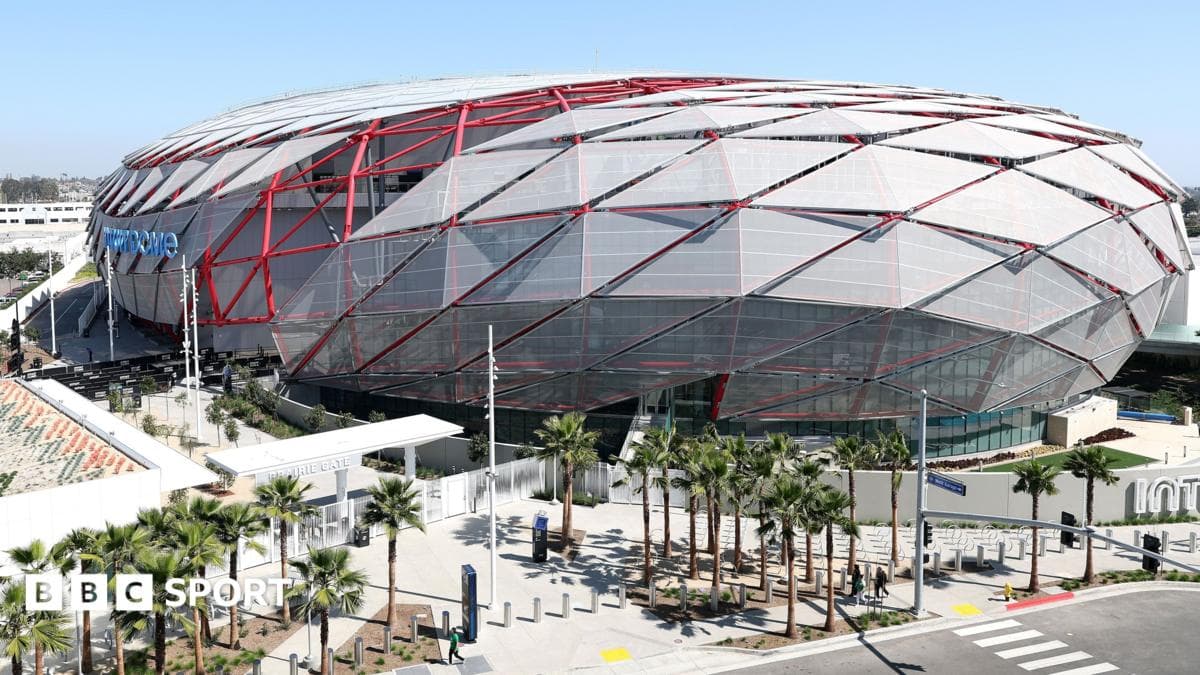
For prospective franchise owners and municipal leaders across Europe, the bottleneck has never been a lack of regional fandom—it has been the prohibitive cost of modern venue financing. Traditional European sports clubs, often tethered to multi-sport athletic clubs or municipal leases, struggle to generate the ancillary revenues enjoyed by North American franchises. The newly assembled investment group aims to bridge that exact capital gap by supplying both hard funds and operational blueprints drawn from recent domestic builds, such as the 10,000-seat Intuit Dome that opened in August 2024 for the LA Clippers.
NBA commissioner Adam Silver pointed directly to the community-level transformation driving the initiative. That blueprint leans heavily on real estate development around the court as much as the hardwood itself.
"We've seen first-hand how state-of-the-art arenas and the related developments around them can transform basketball teams and their surrounding communities."
— Adam Silver, NBA Commissioner
The strategic roadmap grants participating clubs direct access to specialized construction expertise. Silver noted that the partnership with Fiba represents a deliberate effort to blend regional athletic traditions with modern commercial architecture. The stated goal is to elevate fan engagement while positioning European arenas as year-round venues capable of drawing diverse live entertainment acts beyond basketball.
Case Study: Paris’ Proposed Arena Complex
Paris’ mayoral office unveiled a preliminary site plan that clusters a 14,000-seat arena with a hotel, a tech incubator, and a public park. The proposal leverages existing rail links, promising fans a seamless commute from the city center. If the plan clears the city council’s budget committee by early 2025, construction could commence before the summer of 2026, leaving a narrow window for the league’s inaugural season.
Local developers stress that the project’s success hinges on securing a 30-year operating lease that guarantees steady revenue streams for both the franchise and the municipality. Negotiators have already drafted a revenue-sharing model that mirrors the NBA’s domestic arena contracts, a template that could become the standard for all European partners.
Economic Projections and Quantitative Skepticism
Proponents of the 10bn euro infrastructure push rely heavily on economic impact models to justify the sheer scale of the investment. A commissioned study by The Sports Consultancy projects that the joint NBA-Fiba league could contribute more than 24bn euros in gross value added to GDP across Europe over its deployment window. Furthermore, the models estimate the creation of nearly 15,000 full-time equivalent jobs annually, alongside a cumulative draw of nearly 70 million spectators across the first decade of operation.
Job Creation Figures Under Scrutiny
Critics argue that the study conflates permanent hospitality roles with temporary construction positions, inflating the headline job count. In past European stadium projects, such as the renovation of Berlin’s Olympiastadion, initial employment forecasts fell short by roughly 20 percent once the build phase ended. Skeptics warn that the NBA-Fiba partnership must distinguish between short-term labor spikes and lasting employment to avoid public backlash.
Yet quantitative skeptics note that feasibility studies commissioned by promoters routinely rely on best-case multipliers that rarely survive municipal zoning friction or localized public resistance. Infrastructure projects of this magnitude face notoriously high cost-overrun risks, and projected employment figures often mix permanent hospitality jobs with temporary construction labor. Whether private investment firms can absorb localized zoning delays across multiple sovereign European jurisdictions remains the central test of the 2027 timeline.
Speaking on behalf of the financial backers, the investor syndicate emphasized the long-term horizons required for such a capital-heavy pivot across established European markets. The financial partners framed the expenditure as a structural upgrade rather than a short-term promotional blitz.
"Together, we have the potential to invest billions of euros to create world-class venues in European cities, honouring the passion and traditions of European basketball fans and supporting lasting economic growth in the communities where the game means so much."
— Anonymous Investor Syndicate, Statement released via BBC
Structural Shifts for the Global Sports Ecosystem
This capital injection signals a fundamental shift in how North American sports leagues export their operational models. Rather than relying on exhibition tours or digital streaming rights, the NBA is attempting to co-own the physical infrastructure of a competing continent. If successful, the 2027 league will not merely test a new athletic format; it will establish a standardized real estate and entertainment template that could permanently alter the economics of international Business & Finance surrounding professional sports.
Potential Ripple Effects on European Basketball Leagues
Domestic leagues such as Spain’s ACB and Italy’s Lega Basket will face a new competitive landscape that blends on-court talent pipelines with off-court venue ownership. Teams that secure an NBA-backed arena may attract higher sponsorship fees, while clubs that cling to older municipal facilities could see attendance dip as fans gravitate toward the newer, amenity-rich complexes.
The immediate burden now shifts to the selected European clubs and municipal governments that must decide whether to partner with the incoming syndicate or defend legacy structures. With ground-up construction timelines stretching across multiple years, the actual physical footprint of this 10bn euro bet will become visible well before the first official tip-off.
Regulators in Brussels have scheduled a preliminary review of the cross-border investment structure for early 2026, a deadline that will force the syndicate to disclose detailed financing terms. Cities that meet the review’s transparency requirements could unlock additional public-private grants, accelerating their arena projects by up to twelve months.
Stakeholders across the continent now watch the calendar turn, aware that each municipal vote will either cement a new era of basketball-driven urban renewal or preserve the status quo of aging sports venues.
The Morning Brief
One email a day with the stories that matter. Free, forever.
No spam. Unsubscribe anytime.
Comments (0)
Be the first to share your thoughts.