
Ghana Cocoa Board Pulls Central Region Fertilizer Stock Over Labelling Red Flags
The Ghana Cocoa Board has initiated a recall of Natural Asontem liquid fertilizer in the Central Region following labelling and expiry date concerns.
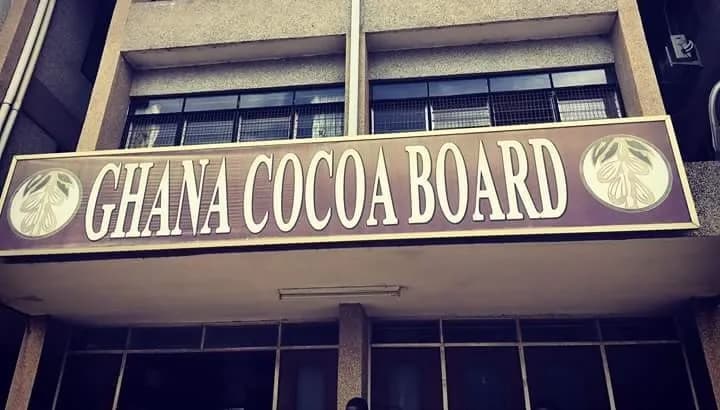
According to myjoyonline.com, the Ghana Cocoa Board (COCOBOD) has initiated arrangements to recall potentially affected Natural Asontem liquid fertiliser products distributed to cocoa farmers in the Central Region following concerns about expiry dates and labelling discrepancies. The real story here involves a fragile chain of trust binding agricultural regulators, commercial suppliers, and rural producers who depend on timely seasonal deliveries.
When social media videos began circulating and highlighting anomalies on product containers, institutional machinery had to pivot quickly. COCOBOD confirmed in a statement dated November 25, 2026, that an internal post-distribution evaluation was already underway before the digital clips surfaced. That prior assessment had independently flagged irregularities within specific inventory batches, forcing regulators to retrace thousands of liters of agricultural inputs across multiple administrative districts.
Regulatory investigations require swift coordination across government agencies and private contractors to protect seasonal yields. Farmers operating in remote areas often rely entirely on scheduled deliveries to manage soil nutrition and protect pods against fungal attacks or nutrient deficiencies. When batches face questions, field operations stall immediately.
Tracing the Supply Footprint From Spintex Warehouses to Central Farms
Logistical oversight dictates how fast a regulatory body can contain a regional product dispute. COCOBOD's internal audit traced the bulk of the questioned items to supplies dispatched from the Spintex Warehouse into three distinct farming districts within the Central Region. Meanwhile, parallel shipments routed through the Abuakua and Koforidua distribution nodes toward the Eastern and Volta regions yielded no similar red flags.
The manufactured timeline shows the stock in question rolled off production lines in December 2024 carrying a stated expiry date of December 19, 2026. Audit teams alongside product verification reports from the Cocoa Research Institute of Ghana (CRIG) confirmed those baseline dates. Even so, discrepancies in secondary labelling during initial receipt inspections had already triggered official demands for the contractor to rectify documentation gaps before full field deployment.
Warehouse managers handle immense volumes of liquid formulations, making meticulous record-keeping essential for tracing compromised goods. Each batch requires verification against factory certificates and customs clearance paperwork before trucks depart for rural depots. Any disconnect between physical container markings and manifests creates severe bottlenecks when auditors must recall thousands of units.
Weighing National Distribution Scale Against Localized Batch Failures
To understand the operational footprint, one must look at the macro picture of the national Economy & Markets landscape for agricultural inputs. COCOBOD reports having deployed approximately 1.4 million bags of granular fertiliser alongside 1,601,592 liters of liquid formulation nationwide, spanning 15 distinct commercial brands.
Within that broad inventory allocation, Natural Asontem accounted for a specific slice: 143,916 total liters distributed across three main logistical conduits. Breakdown figures show 69,552 liters moved through the Abuakua Warehouse, 22,188 liters passed through Koforidua, and 52,176 liters cleared the Spintex facility bound for Central Region farms. The contract itself originated in 2024, awarded to K. Badu Agro Chemical Ltd to bolster farm productivity across major cocoa belts.
Managing millions of liters of liquid agrochemicals across diverse terrain tests the limits of state-backed supply chains. Suppliers win lucrative tenders to deliver inputs on strict timetables, but administrative oversight must keep pace with commercial scale. When quality control slips, the fallout impacts thousands of smallholder households.
Enforcing Accountability Measures Across Supplier Networks
Regulators now face the delicate task of auditing batch details, manufacturing timestamps, and label accuracy without stalling ongoing seasonal farming activities. Investigations are currently active to determine the precise volume of compromised containers and pinpoint where procedural breakdowns occurred during handling. COCOBOD leadership indicated that punitive sanctions will follow if formal inquiries uncover professional negligence, misconduct, or willful circumvention of mandatory inspection protocols.
For rural producers watching the fallout, the immediate priority remains input reliability and crop protection. The board's public assurances attempt to stabilize farmer confidence across the Africa agricultural sector, signaling that future distribution rounds will face tighter compliance gates before reaching regional warehouses.
"The real story here isn't just a paperwork mix-up on farm inputs — it's the fragile chain of trust binding agricultural regulators, commercial suppliers, and rural producers who depend on timely seasonal deliveries."
COCOBOD Operational Assessment
Contractors operating within the national cocoa framework must adhere to strict quality parameters enforced by scientific bodies like CRIG. When discrepancies emerge after distribution has already begun, the cost of retrieval strains public resources and disrupts local farming calendars. Every liter recalled demands a replacement strategy that ensures farmers don't miss crucial application windows during the growing season.
Accountability mechanisms must prove effective to prevent similar discrepancies from recurring in future distribution cycles. As compliance officers examine warehouse logs and contractor responsibilities, the ultimate test lies in restoring absolute clarity to the agricultural supply chain before the next major harvest arrives.
The Morning Brief
One email a day with the stories that matter. Free, forever.
No spam. Unsubscribe anytime.
Comments (0)
Be the first to share your thoughts.