
Anita DeFrantz, Olympic Rowing Medallist and Trailblazing IOC Member, Dies at 74
Anita DeFrantz, an Olympic rowing bronze medallist and pioneering IOC member who broke gender and racial barriers in sports administration, has died at 74.
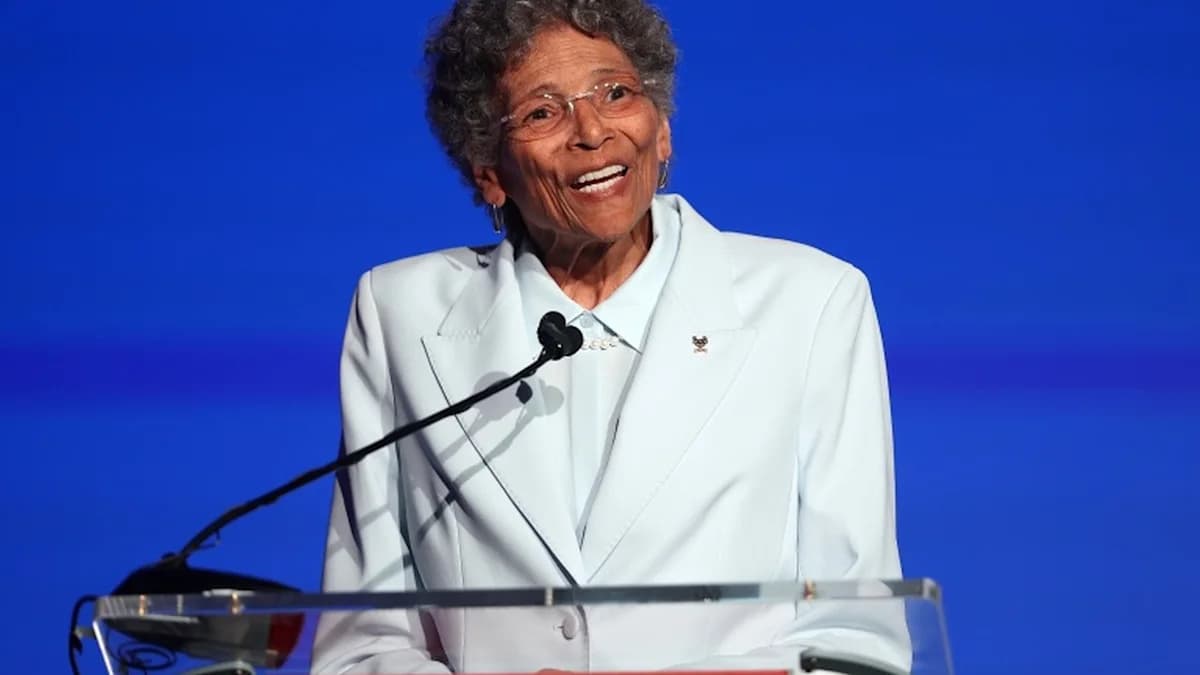
According to reports from Yahoo Sports and international wire services, Anita DeFrantz has died at the age of 74. DeFrantz built a formidable legacy across five decades in athletics, serving as an Olympic bronze medallist, a fierce legal challenger to state-sponsored athletic boycotts, and the first American woman and African-American to sit on the International Olympic Committee.
While athletic biographies often lean on medal counts and board seats to measure impact, DeFrantz's career forces a different accounting. Her metrics span 13 years on the IOC executive board, two decades chairing the Women and Sport Commission, and a historic election as the organization's first female vice president in 1997.
Sports administrators often frame institutional reform as a gradual evolution, but DeFrantz's tenure shows how relentless pressure from within alters governance structures.
The Gap Between Symbolic Representation and Structural Power
Public commentary following the death of a historic figure typically focuses on symbolic firsts. DeFrantz secured many of those milestones, starting with her captaincy of the US rowing team that claimed bronze in the women's eight at the 1976 Montreal Olympics. Yet the structural reality of her administrative career reveals influence that extended far beyond token inclusion.
Challenging the 1980 Moscow Boycott in Federal Court
When the United States government forced a boycott of the 1980 Moscow Olympic Games, DeFrantz didn't accept the geopolitical decree quietly. She led a group of athletes in a lawsuit against the United States Olympic Committee to block the boycott. While the legal challenge ultimately failed in court, the fight transformed her relationship with international sports politics.
That high-profile dispute thrust her into global administration, culminating in her election to the IOC in 1986. She took her seat with a clear understanding that governments would routinely sacrifice athletes for diplomatic leverage unless sport officials actively pushed back against state interference.
Driving Institutional Reform Through the Women and Sport Commission
Elected to the IOC executive board, DeFrantz spent nearly 20 years chairing the Women and Sport Commission. She systematically pushed global sports federations to fund women's programs equally and include female athletes across all disciplines. Data from the IOC shows female participation climbing steadily across successive Summer Games during her administrative tenure, reaching near-parity at recent events. Her oversight converted vague inclusivity pledges into mandatory qualification quotas and funding targets.
National Olympic committees that failed to field female competitors faced immediate administrative scrutiny under her watch. She also ensured that broadcast revenues were tied directly to compliance with gender equity milestones. That financial leverage forced resistant regional bodies to update their training budgets and selection processes within tight deadlines.
The Rowing Shell as a Blueprint for Governance
Born in Indianapolis in October 1952, DeFrantz discovered rowing as a student at Connecticut College. She frequently pointed to the extreme synchronicity of the sport to explain her administrative philosophy. In a rowing shell, individual pacing errors destabilize the entire vessel.
Unlike other sports, we can't say 'OK, I need a couple of strokes off. I'll get back with you,' We're in it together, and that taught me so much.
— Anita DeFrantz, US Olympic and Paralympic Hall of Fame Induction
That interdependence shaped her approach to international sports diplomacy. She routinely challenged colleagues to justify policies by their direct impact on competitors rather than commercial partners. Industry analysts note that her advocacy helped secure vital protections for athletes navigating labor disputes and federation governance battles.
She brought the same obsessive discipline from the water to boardrooms in Lausanne and Washington. Every policy proposal faced rigorous cross-examination regarding how it affected the daily training realities of working-class athletes. DeFrantz never let institutional budgets overshadow the physical welfare of the competitors generating the spectacle.
Measured Realities of Olympic Leadership Transitions
Evaluating DeFrantz's legacy requires acknowledging the stubborn inertia of global sports bodies. Despite her two decades of leadership, sports administration remains heavily male-dominated across regional federations and national committees. DeFrantz herself noted the slow pace of change, even as she mentored a new generation of leaders.
Mentoring the Next Wave of Global Sports Executives
That mentoring pipeline bore fruit earlier this year during the torch relay for the Milan-Cortina Winter Olympics. DeFrantz handed the Olympic flame to Kirsty Coventry, who later assumed the role of IOC president as the first woman to lead the organization. Coventry acknowledged that handoff as a defining moment for female leadership in the sports sector, noting how DeFrantz mapped out the path decades in advance.
Young administrators frequently sought her counsel when facing retaliation from entrenched federation bosses. DeFrantz provided practical tactical advice on building coalitions across linguistic and cultural divides. Her office functioned as an informal sanctuary for whistleblowers within the global Olympic apparatus.
Navigating Commercial Pressures and Accountability
DeFrantz's death closes a chapter defined by principled dissent and institutional tenacity. As global sports organizations grapple with commercial pressures and governance reform, her career remains a baseline for holding international committees accountable to athletes.
Her permanent footprint rests on the countless structural adjustments forced through reluctant committees. Future executive boards will operate within frameworks she designed to protect athlete welfare against corporate overreach.
The Morning Brief
One email a day with the stories that matter. Free, forever.
No spam. Unsubscribe anytime.
Comments (0)
Be the first to share your thoughts.