
330 Journalists Imprisoned Globally Highlight Growing Legal Threats to Press Freedom
330 journalists were behind bars at the end of 2025, exposing a surge in legal actions that threaten press freedom across Nigeria, Egypt and India.
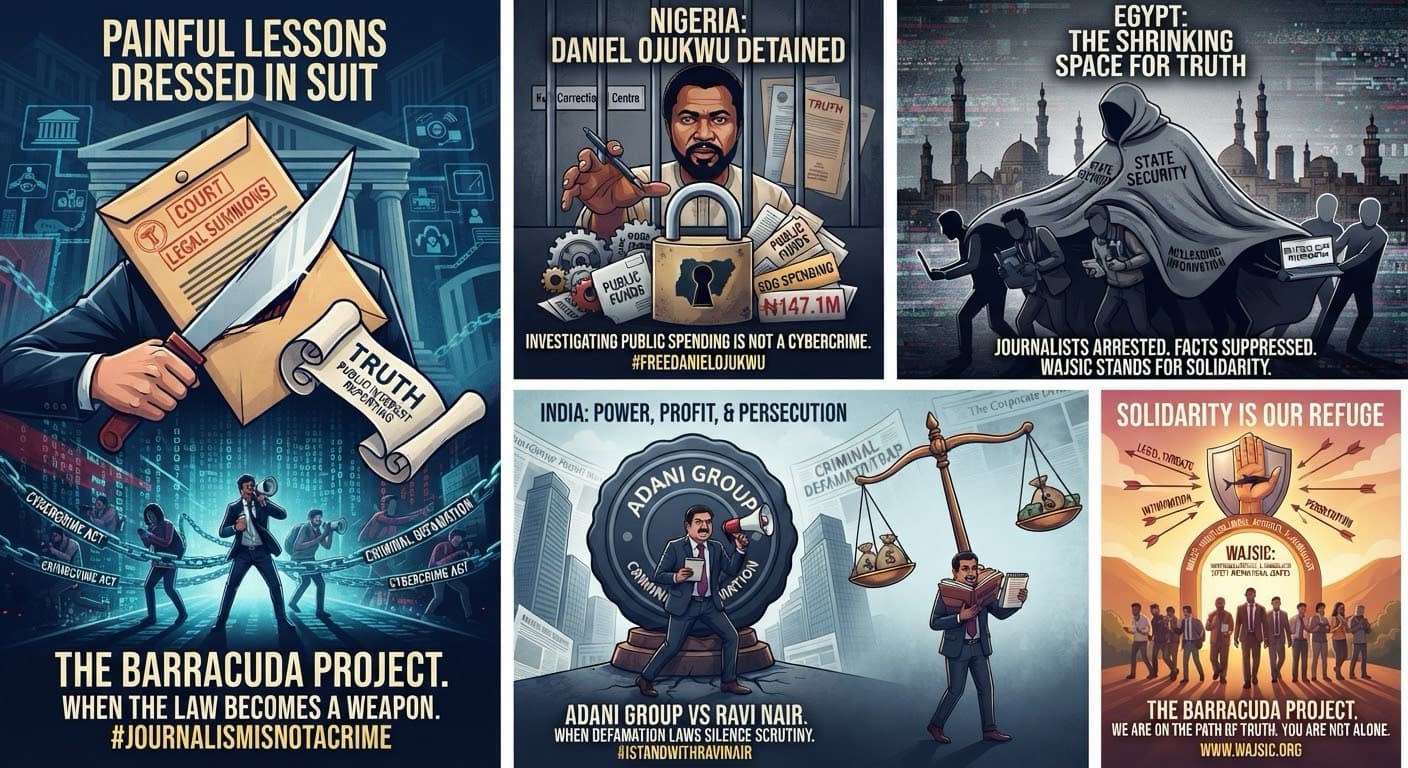
According to Ghana Business News, 330 journalists were behind bars at the end of 2025, the highest count since the Committee to Protect Journalists began tracking incarcerations in 1992. The tally underscores a wave of legal actions that masquerade as national security or cybercrime enforcement while silencing investigative reporting.
Why the numbers matter
When a single digit—like 330—represents individuals confined for doing their job, the impact ripples far beyond the prison walls. Each case signals to newsrooms across continents that a court summons can replace a newsroom debate, that a legal brief can replace a public record request. The trend erodes the watchdog function that democratic societies depend on, and it does so under the veneer of legitimate law.
Nigeria: cybercrime statutes as a press‑shaping tool
On November 10, 2026, journalist Daniel Ojukwu of the Foundation for Investigative Journalism was placed on remand at Kuje Correctional Centre, Abuja. He faced twelve criminal defamation and cyber‑stalking charges after reporting on a ₦147.1 million contract awarded to a restaurant for building classrooms and a skills‑acquisition centre. The investigation asked a simple public‑interest question: were the promised facilities delivered and were public funds used appropriately?
Instead of a transparent audit, Ojukwu’s not‑guilty plea led to a detention that will last until at least a bail hearing on December 1. Nigeria’s 2026 Cybercrime Act, originally intended to combat identity theft and online fraud, has repeatedly been invoked against journalists whose work scrutinises public officials. Press‑freedom watchdogs argue that the law’s broad language makes it a convenient lever for intimidation.
RSF’s Press Freedom Index recorded a jump from 122nd to 112th for Nigeria in 2026, yet the country remains 149th globally for journalist security. Ojukwu’s case illustrates that a higher ranking does not automatically translate into safety on the ground.
Egypt: national security charges mask attacks on independent media
In late September 2026, six journalists from the investigative platform Matsadaash were detained by Egyptian authorities. Amnesty International reported that the journalists were subjected to torture and coerced statements, while human‑rights groups noted an initial period of in‑communicado detention.
The official charge: disseminating “misleading information” and attempting to destabilise the state. Among the detained was Mohamed Adel, who had been probing Deutsche Bank’s financial documents for a cross‑border investigative project. While his colleagues completed and published the story, Adel remained behind bars, highlighting a stark irony—exposing global finance can invite local incarceration.
RSF’s 2026 World Press Freedom Index placed Egypt at 169th of 180 nations, a ranking that reflects a climate where the line between genuine security enforcement and suppression of dissent is increasingly blurred.
India: corporate‑driven defamation prosecutions
February 2026 saw investigative journalist Ravi Nair sentenced to one year in prison after the Adani Group sued him for criminal defamation. Nair’s social‑media posts criticised the conglomerate’s business practices; his defense argued the remarks were based on publicly available information and constituted fair criticism. The court, however, deemed the content defamatory.
India’s press‑freedom ranking slipped from 151st in 2025 to 157th in 2026, according to RSF. The decline is linked to overt political alignment among media outlets, concentrated ownership, and an uptick in violence against journalists. Nair’s case exemplifies how powerful corporations can wield the legal system to silence scrutiny, raising concerns about the broader health of investigative journalism in the country.
A broader pattern and a cautious outlook
The three cases share a disturbing commonality: legal mechanisms—whether framed as cybercrime, national security, or defamation—are being repurposed to curb uncomfortable reporting. At the end of 2025, CPJ reported that 330 journalists were imprisoned worldwide, the third‑highest figure since 1992. RSF’s 2026 index found that 110 of 180 surveyed countries experienced a decline in the legal environment for the press.
These figures do not prove that every prosecution is politically motivated; some may involve genuine wrongdoing. However, the data does reveal a pattern where the threshold for criminal charges against journalists is lowering, and the consequences are increasingly severe.
Caveat: interpreting the data
While the numbers paint a grim picture, they do not capture the full nuance of each case. Legal proceedings differ in evidentiary standards, and some journalists may ultimately be exonerated. Moreover, the data sources rely on reporting from NGOs that may have limited access in certain jurisdictions. Readers should view the statistics as indicators of risk rather than definitive proof of intent.
What lies ahead?
Regional bodies such as the African Union and national judiciaries face mounting pressure to separate legitimate security concerns from outright repression. Reform proposals include narrowing defamation statutes, establishing independent media tribunals, and ensuring that cybercrime laws are applied proportionally.
International advocacy groups argue that without clear safeguards, the weaponisation of law will continue to erode public trust in institutions. For journalists, the reality is a growing need to balance investigative ambition with personal safety, often seeking legal counsel before publishing contentious stories.
The global community must decide whether the current trajectory—where a suit, a summons, or an arrest can replace a story—will become the new norm, or whether concerted reform can restore a space where truth‑telling is protected rather than punished.
The Morning Brief
One email a day with the stories that matter. Free, forever.
No spam. Unsubscribe anytime.
Comments (0)
Be the first to share your thoughts.